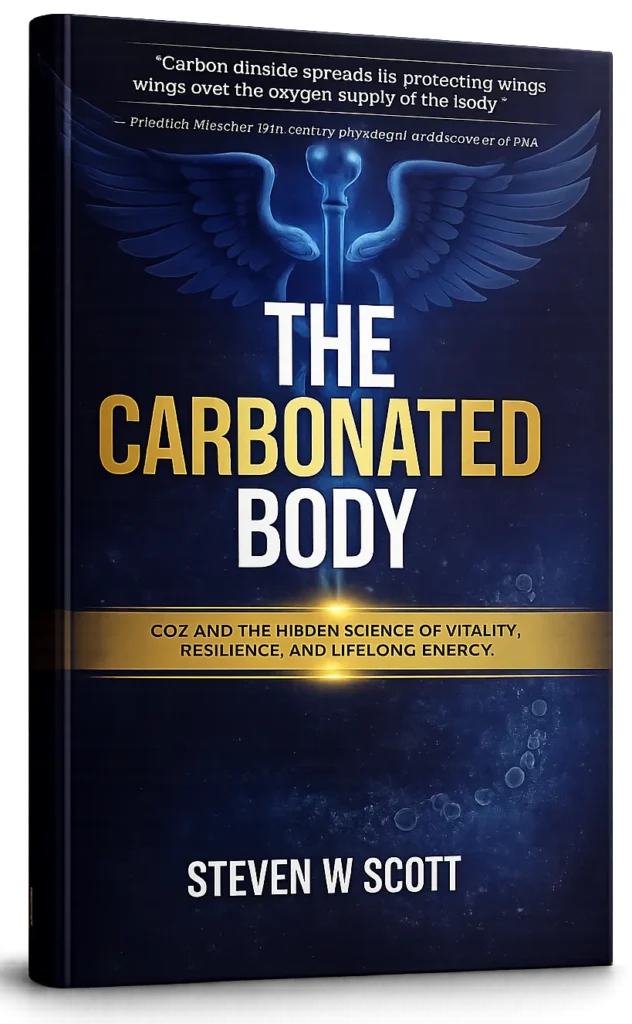
The Hidden Layer That May Protect Your Blood Vessels
Most people think blood vessels are simple tubes that move blood through the body. Blood goes in, blood comes out, and the heart does all the work.
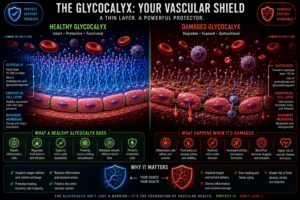
But inside every healthy blood vessel is a microscopic protective layer called the glycocalyx. This thin gel-like structure lines the inside of the vessel wall and quietly helps regulate blood flow, oxygen delivery, inflammation, clotting, and immune activity.
Researchers now believe damage to this hidden layer may be one of the earliest steps in vascular disease long before plaque buildup becomes visible.
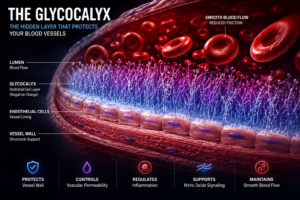
The glycocalyx is not a static coating. It behaves more like a living biological interface. Imagine a dense underwater forest moving gently with flowing blood. Red blood cells glide across this hydrated layer instead of scraping directly against the vessel wall.
This matters because the glycocalyx helps maintain smooth circulation. It reduces friction, supports nitric oxide signaling, limits excessive immune adhesion, and helps control vascular permeability.
The structure is also highly negatively charged. Red blood cells carry a negative charge too, which helps keep them separated and flowing smoothly instead of clumping together.
One of the most fascinating parts of this system involves water itself.
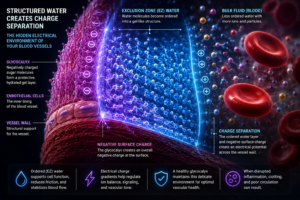
Near biological surfaces, water becomes more organized into what researchers sometimes call structured or exclusion-zone water. Instead of behaving like ordinary fluid, the water near the glycocalyx forms a more ordered gel-like environment that helps separate electrical charge across the vessel surface.
This creates a type of electrical organization inside the blood vessel wall.
The glycocalyx, structured water, and surrounding charge gradients begin working together like a living electrical interface supporting stable blood flow and vascular function.
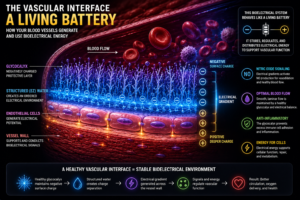
Unfortunately, modern life appears almost perfectly designed to damage this system.
Chronic inflammation, oxidative stress, smoking, high blood sugar, poor circulation, stress hormones, and chronically low carbon dioxide levels can all contribute to glycocalyx breakdown.
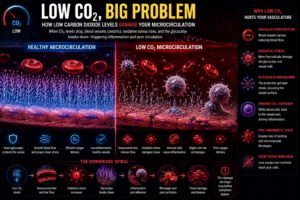
When carbon dioxide levels fall, blood vessels constrict, circulation becomes less efficient, oxidative stress rises, and the glycocalyx can begin shedding from the vessel wall.
As this happens, immune cells stick more easily, inflammation increases, and the vessel surface becomes unstable.
This is where carbon dioxide becomes especially interesting.
Most people think of CO2 as nothing more than a waste gas, but biology tells a more complicated story. Carbon dioxide helps relax blood vessels, improve microcirculation, support oxygen delivery through the Bohr effect, and stabilize cellular energy production.
Higher CO2 levels also help maintain the electrochemical environment that structured water and the glycocalyx depend on.
In other words, carbon dioxide may help preserve the conditions that allow blood vessels to function properly.
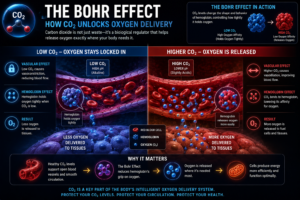
When the glycocalyx remains healthy, circulation becomes smoother and more efficient. Oxygen reaches tissues more effectively, inflammation is easier to control, and the vessel wall stays more stable.
But when the glycocalyx deteriorates, blood flow becomes chaotic. Microcirculation suffers, oxygen delivery declines, and inflammation accelerates.
This may help explain why vascular dysfunction often appears before obvious disease develops.
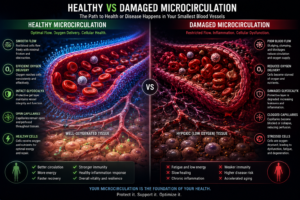
Conditions like atherosclerosis and diabetes may not begin simply as cholesterol or blood sugar problems. They may begin as problems of vascular terrain, microcirculation, inflammation, and structural breakdown inside the vessel wall itself.
The glycocalyx may be one of the most overlooked parts of that entire system.

Right now, inside your body, blood is moving through a highly organized living environment. Not just fluid moving through tubes, but a structured biological system built on flow, electrical organization, oxygen delivery, and vascular stability.
And protecting that hidden microscopic layer may be more important than most people realize.
Learn more at THECARBONATEDBODY.COM