Presence is not delivery. A brain that is fed can still be a brain that is starving, if what it is fed never reaches the cell.
Introduction: The Energy Myth of a Foggy Mind
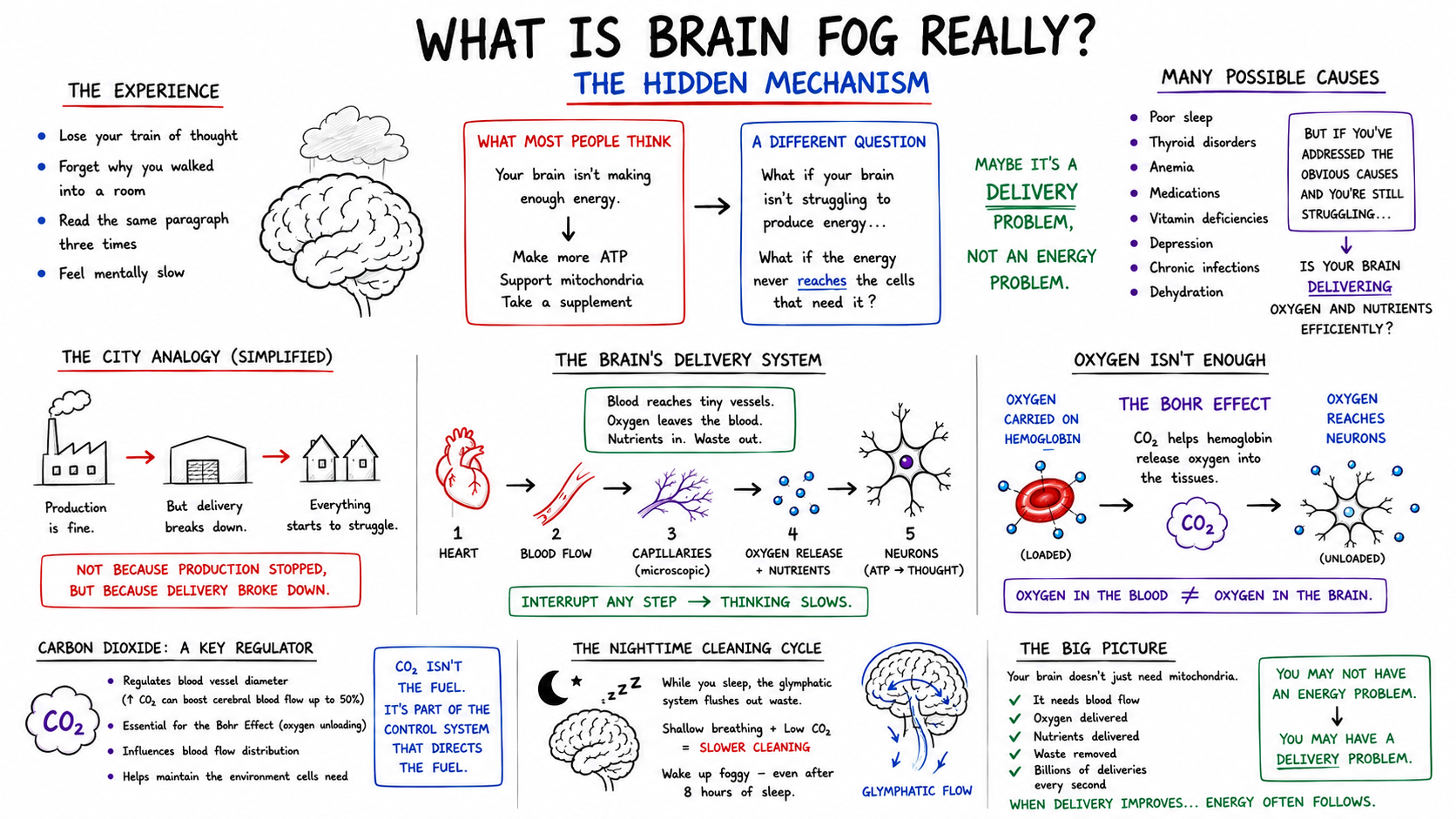
You can sleep eight hours, eat well, get normal blood work, and still feel like your brain is moving through mud. The words come slower. The train of thought derails halfway through a sentence. You read the same paragraph three times before it sticks.
The usual explanation is that the brain has run out of fuel: not enough ATP, weak mitochondria, missing nutrients, another supplement waiting to be discovered. This explanation is comforting because it points to something you can buy or take. It is also, often, incomplete.
Brain fog is rarely a single-cause problem. Poor sleep, thyroid dysfunction, anemia, medication side effects, nutrient deficiencies, depression, chronic infection, and dehydration all deserve to be ruled out first, and none of them should be ignored in favor of a more interesting theory. But when the obvious causes have been addressed and the fog remains, it is worth asking a different question than the one everyone starts with.
Supply Is Not the Same as Delivery
The question is not whether your brain has enough oxygen, glucose, and nutrients available somewhere in the body. In most cases, it does. The question is whether those things are actually reaching the neurons that need them, in the moment they need them.
This is one of the oldest confusions in physiology: mistaking presence for use. Oxygen saturation is not oxygen delivery. A pulse oximeter reading of 98 percent tells you what is circulating in the blood. It tells you nothing about whether that oxygen ever leaves the bloodstream and enters the tissue that is asking for it. The same gap exists for glucose, for micronutrients, and for the signals that tell blood where to go. Something can be fully present and still functionally unusable, present but unusable, if the delivery system that carries it the last mile is not working.
The City Beneath the City
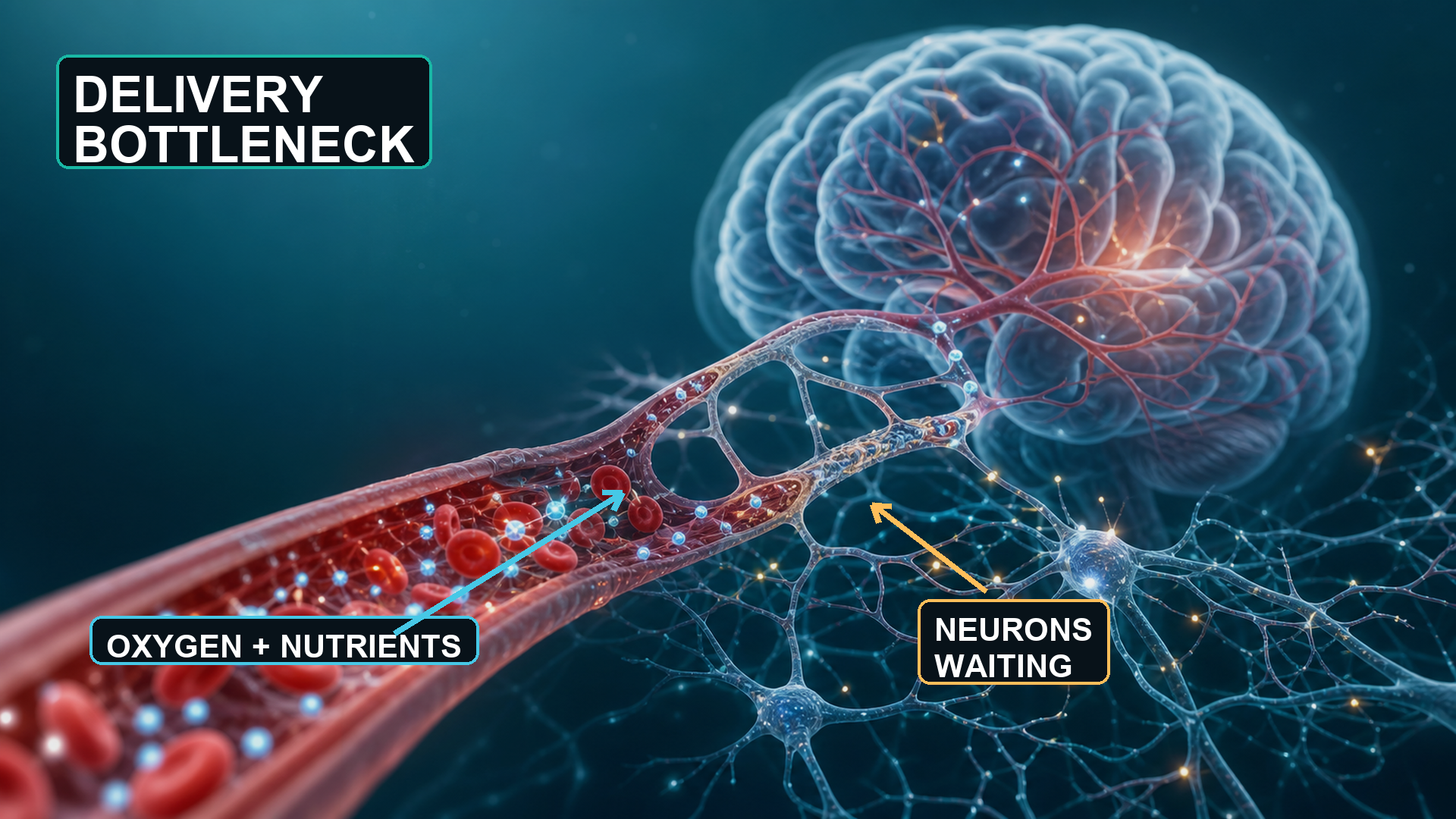
Think of the brain the way you would think of a city’s utility grid. A power plant can be running at full capacity, and a warehouse can be fully stocked, and none of it matters if the roads connecting them to individual houses are congested or closed. In that scenario, the problem is never production. It is access.
Inside the brain, the roads are capillaries: vessels so small that red blood cells sometimes have to change shape just to pass through them single file. Every neuron depends on a dense, living network of these microscopic routes to receive oxygen, receive glucose, and clear away metabolic waste. This is what the body’s structure actually is, not just the visible architecture of vessels and organs, but the microscopic architecture that determines whether flow can reach its destination at all. When structure narrows or becomes inaccessible at this scale, no amount of supply upstream fixes the shortage downstream.
1904: The Discovery That Explains Why Oxygen Alone Isn’t Enough
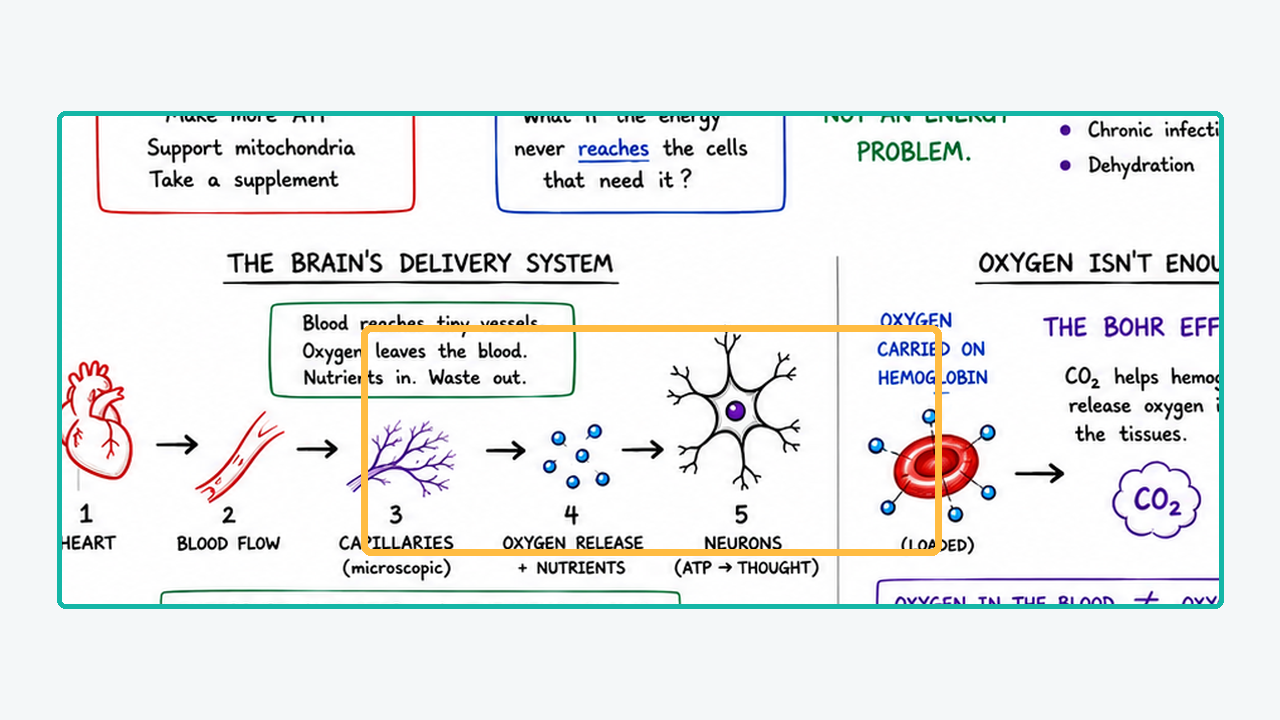
In 1904, the Danish physiologist Christian Bohr made an observation that is still underappreciated outside of respiratory physiology. He found that hemoglobin, the protein in red blood cells that carries oxygen, does not release that oxygen indiscriminately. It releases oxygen in response to the local concentration of carbon dioxide.
This is now called the Bohr effect. In practice, it means oxygen bound to hemoglobin is essentially cargo in transit until carbon dioxide, produced by active, working tissue, signals hemoglobin to let go of it. More CO2 in a given tissue means more oxygen unloaded there. Less CO2 means hemoglobin holds on tighter, and oxygen keeps circulating in the blood instead of reaching the cell that needs it.
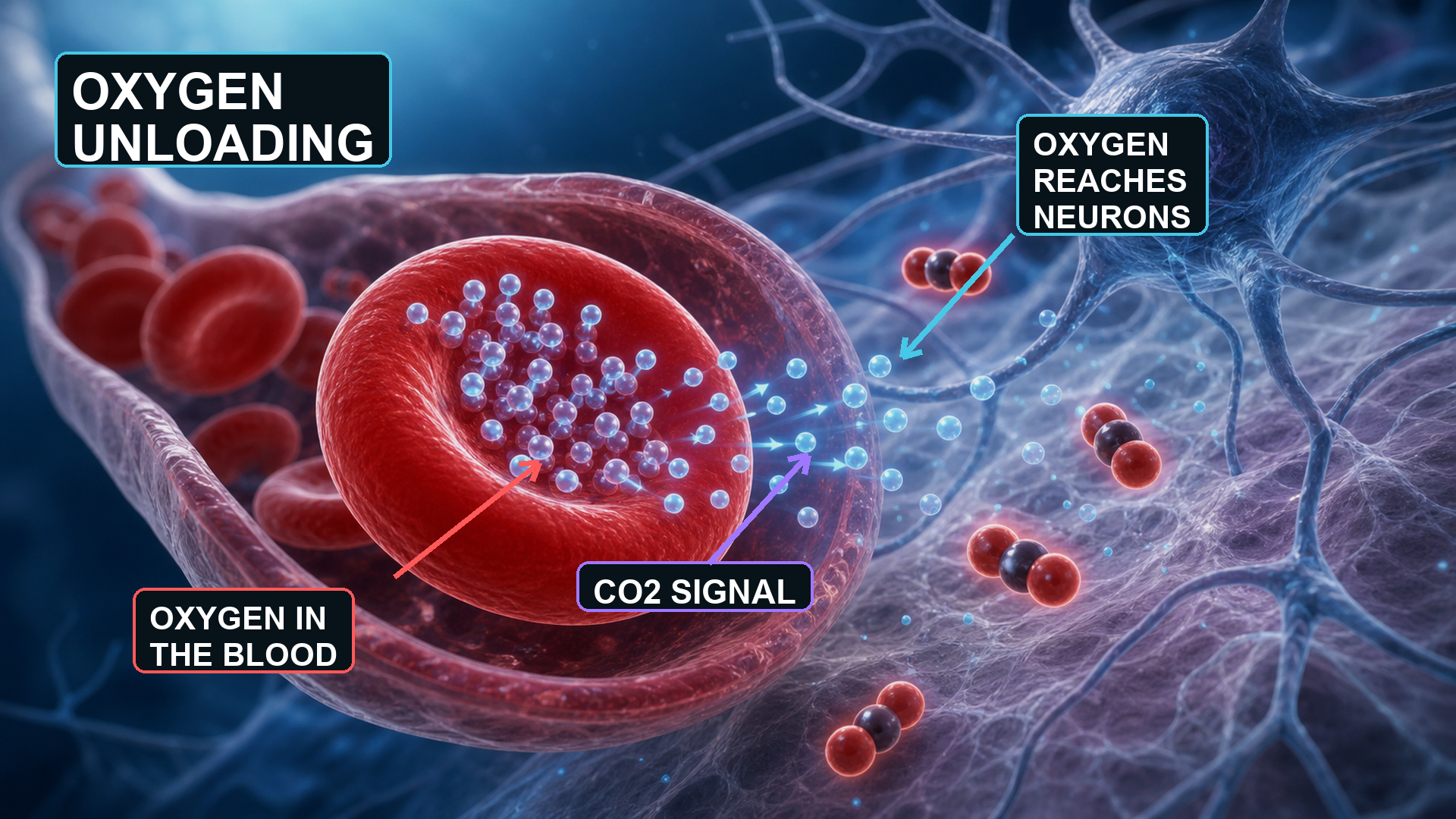
This is the mechanism behind the gap between oxygen in the blood and oxygen in the brain. You can have excellent blood oxygen levels and still have neurons that are not receiving what they need, because the final handoff depends on a second signal that most people have never heard of.
Carbon Dioxide as Coordinator, Not Cure
None of this makes carbon dioxide a cure for brain fog, and it is not a replacement for sleep, nutrition, movement, or addressing thyroid and blood sugar problems. CO2 does not push the current. It opens the path. It is a coordinator that helps determine whether the delivery system your brain depends on is actually working, alongside everything else you are already doing to support your health.
CO2 also regulates vascular tone, meaning it helps direct blood toward tissue that is metabolically active and needs it most. It participates in the pH buffering that keeps the chemical environment around your cells stable. None of these roles compete with medicine, supplements, or lifestyle change. They sit upstream of all of them, determining how well those other interventions can actually reach the tissue they are meant to help.
The Brain’s Nightly Cleanup
The same delivery logic applies while you sleep. The brain runs a clearing cycle, often described through the glymphatic system, that flushes out metabolic waste accumulated over the day. This cleanup depends on the same blood flow and gas exchange that daytime cognition depends on.
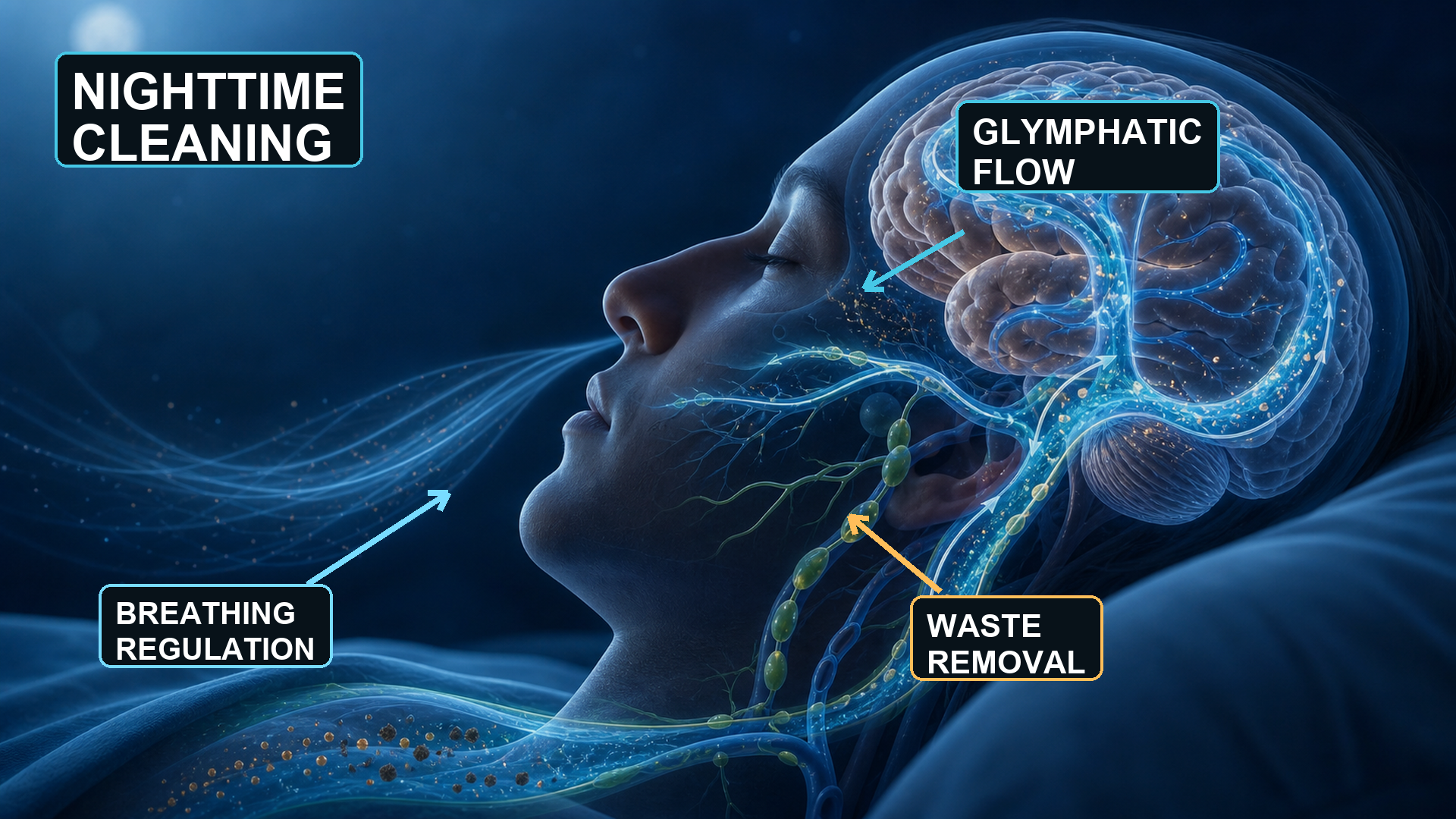
If breathing during sleep is shallow, rapid, or disordered, carbon dioxide levels can run lower than they should, and the vascular tone and exchange that support nighttime clearance may not operate at full capacity. That is one reason someone can sleep a full eight hours by the clock and still wake up foggy. The hours were there. The clearing may not have been.
What This Means for You
If you have already addressed sleep, thyroid function, iron and nutrient status, hydration, and medication side effects, and the fog persists, it may be worth looking at breathing pattern and CO2 tolerance rather than reaching for another stimulant or supplement. Slow, nasal, diaphragmatic breathing supports higher functional CO2 tolerance than chronic mouth breathing or over-breathing under stress. This is not a fast fix. It is a shift in what question you are asking.
Conclusion: Delivery Before Energy
The deeper principle here extends well past brain fog. Whenever something in the body seems deficient, fatigue, poor healing, sluggish digestion, the instinct is to ask what is missing and add more of it. But a body is not a machine waiting to be topped off. It is a living environment where terrain, structure, and flow determine whether anything you add ever becomes usable.
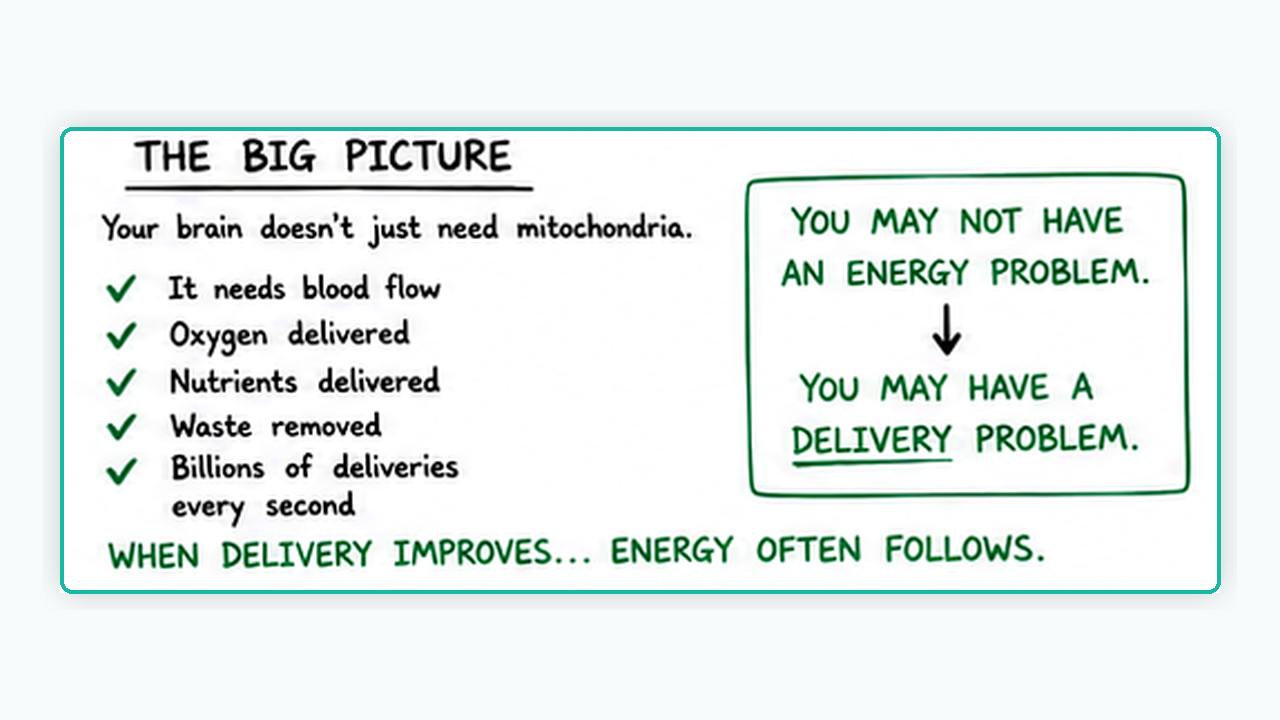
Your brain may not have an energy problem. It may have a delivery problem. And delivery, once restored, tends to bring energy along with it.