Health & Wellness

Nitric Oxide vs CO2: Two Very Different Ways the Body Regulates Blood Flow

Nitric Oxide vs CO2: Two Very Different Ways the Body Regulates Blood Flow Most people have heard that nitric oxide improves blood flow. It is often associated with exercise performance, heart health, circulation, and even longevity. Supplements designed to increase nitric oxide are now everywhere in the wellness world. But there is a deeper physiological question that is rarely discussed: Is all increased blood flow actually beneficial? The answer depends on why the body is increasing circulation in the first place. Sometimes blood vessels open because the body is thriving and producing energy efficiently. Other times they open because the body is responding to stress, inflammation, or oxygen deprivation. Understanding that difference changes the entire conversation around circulation and metabolic health. Nitric Oxide: The Body’s Emergency Messenger Nitric oxide is a signaling molecule that helps blood vessels relax and widen. This process is called vasodilation. When vessels widen, blood can move more easily through tissues. In the short term, this can be extremely helpful. During exercise, stress, low oxygen conditions, or injury, nitric oxide allows the body to rapidly redirect circulation to areas that need support. It acts quickly and powerfully. This is one reason nitric oxide has become so popular in sports performance and cardiovascular research. But nitric oxide was never designed to remain chronically elevated all the time. Physiologically, it behaves more like an emergency response signal than a long-term stability signal. When stress becomes chronic, inflammation stays active, or oxygen delivery remains poor for extended periods, nitric oxide production may remain elevated as the body continually tries to compensate. Over time, this can create unintended consequences inside the cell. The Mitochondrial Connection Mitochondria are often called the “power plants” of the cell because they produce ATP, the energy currency that powers nearly every biological process in the body. These tiny structures rely on oxygen and carefully controlled electron movement to create energy efficiently. When the system is balanced, mitochondria generate energy cleanly and effectively. However, excessive nitric oxide signaling can interfere with this process. Nitric oxide can interact with components of the electron transport chain inside mitochondria. In moderate amounts this may be manageable, but in chronically stressed systems it may contribute to reduced energy production, increased oxidative stress, and impaired cellular efficiency. This is important because many chronic symptoms people experience today are deeply connected to impaired energy production: Fatigue Poor recovery Brain fog Reduced exercise tolerance Chronic inflammation Metabolic dysfunction The body may still be forcing circulation, but cells are no longer producing energy efficiently. This is why improving blood flow alone does not always solve the deeper problem. Why Context Matters One of the biggest mistakes in health discussions is treating all biological signals as universally good or bad. Nitric oxide is not “bad.” It is essential for life and plays an important role in vascular function. The issue is context, timing, and balance. A temporary stress response can be protective. A chronic stress response becomes costly. If tissues are already inflamed, oxygen-starved, or metabolically fragile, constantly stimulating nitric oxide pathways may simply push the system harder instead of helping it stabilize. This is where another molecule becomes incredibly important: carbon dioxide. CO2 Is More Than a Waste Gas Most people think of carbon dioxide as something the body simply removes through breathing. In reality, CO2 plays a critical role in circulation, oxygen delivery, pH regulation, and metabolic stability. Unlike nitric oxide, carbon dioxide functions as a slower and steadier signal. CO2 is directly connected to metabolism itself. As cells produce energy, they naturally generate carbon dioxide. This means healthy CO2 production is often a reflection of efficient energy metabolism. Instead of acting mainly as an emergency messenger, CO2 helps regulate circulation in a more stable and coordinated way. How CO2 Supports Oxygen Delivery One of the most misunderstood concepts in physiology is oxygen transport. Having oxygen in the blood is not enough. Oxygen must also leave the bloodstream and enter tissues where cells can actually use it. Carbon dioxide helps make this possible through a mechanism known as the Bohr Effect. As CO2 levels rise appropriately in tissues, hemoglobin releases oxygen more easily. This improves oxygen unloading exactly where it is needed most. That means CO2 does not compete against oxygen. It actually helps oxygen become more available to cells. This has major implications for: Energy production Endurance Recovery Brain function Tissue repair Cellular resilience Healthy CO2 levels also support smoother microcirculation. Instead of chaotic emergency-driven blood flow, circulation becomes more organized and efficient. The Importance of Microcirculation Microcirculation refers to the smallest blood vessels in the body, including capillaries where oxygen and nutrients are exchanged with tissues. This is where real health happens. Even if major arteries appear healthy, poor microcirculation can still leave tissues undernourished and oxygen deprived. CO2 appears to support this delicate capillary environment by improving blood flow distribution and oxygen exchange efficiency. This creates a very different physiological state than emergency vasodilation. Instead of forcing blood flow temporarily, the body builds conditions where tissues naturally receive what they need consistently over time. Flow By Force vs Flow By Coherence This may be the simplest way to understand the difference. Nitric oxide often represents flow by force during stress or crisis. CO2 represents flow by coherence through balanced metabolism and efficient oxygen delivery. Both molecules matter. Both are part of human physiology. But they are not performing the same role. One helps the body survive emergencies. The other helps create long-term metabolic stability. As research continues to evolve, more people are beginning to realize that health is not simply about stimulating more signals or forcing more output. Real resilience comes from restoring efficient energy production, oxygen use, and stable circulation at the cellular level. That shift in perspective may completely change how we think about metabolism, blood flow, and human performance in the future. Learn more at THECARBONATEDBODY.COM

Nitric Oxide vs CO2: Two Very Different Ways the Body Regulates Blood Flow Read More »

Breathing May Be One of the Body’s Hidden Circulatory Systems

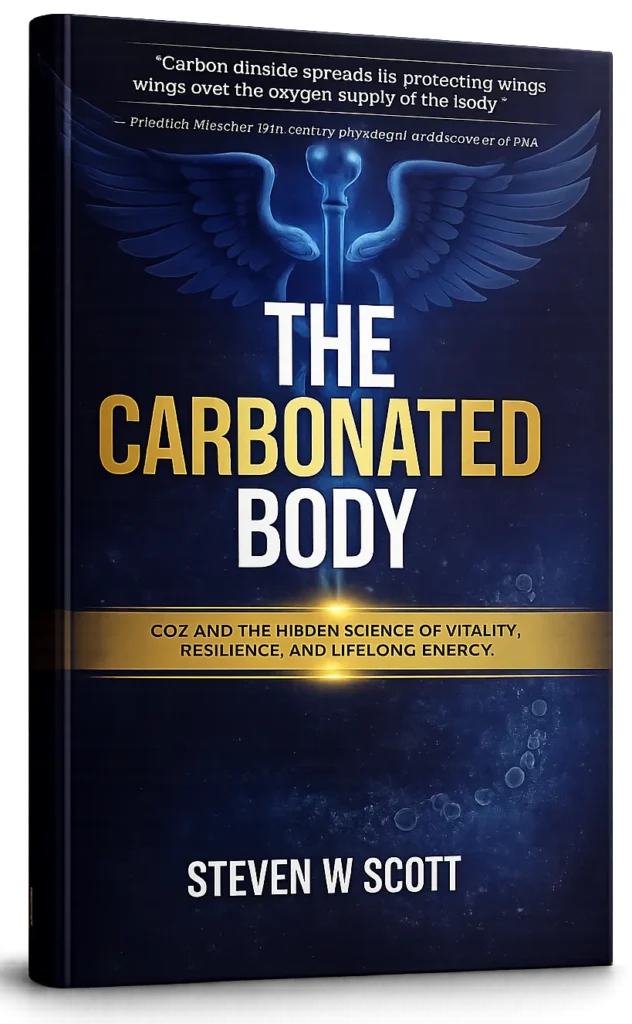
Breathing May Be One of the Body’s Hidden Circulatory Systems Most people think breathing only exists to bring oxygen into the body. But breathing also creates mechanical pressure changes that help move blood, lymphatic fluid, and other vital fluids throughout the body. This idea is explored in Chapter 11 of The Carbonated Body, where breathing is described as more than a respiratory process. The diaphragm acts like a secondary circulatory pump that assists movement through systems the heart cannot fully manage alone. The result is a completely different way to understand breath, circulation, recovery, and internal flow. The Diaphragm Works Like a Pressure Pump Every inhale changes pressure inside the chest cavity. As the diaphragm contracts and moves downward, blood is pulled upward through the veins toward the heart. During exhalation, pressure shifts again and helps push fluid through the lymphatic system. This creates rhythmic pressure waves through the torso that assist circulation continuously throughout the day. Unlike arteries, many veins and lymphatic vessels rely heavily on movement and pressure changes to move fluid efficiently. Breathing helps provide that movement internally. These pressure changes may also influence cerebrospinal fluid movement around the brain and spinal cord, helping circulation reach areas where passive flow is slower. Why Slow Controlled Breathing Changes the Body Slow breathing has already been associated with improved heart rate variability, reduced stress signaling, and stronger parasympathetic activity. In simple terms, the body shifts into a more restorative state. But the effects may go beyond relaxation. As breathing becomes slower and deeper, the diaphragm becomes more active. This increases the strength of the internal pressure waves moving through the torso. That can improve: Venous return to the heart Lymphatic circulation Oxygen delivery to tissues Internal fluid movement Breathing becomes more than air exchange. It becomes part of the body’s transport system. The Role of Carbon Dioxide in Circulation Carbon dioxide is usually viewed as a waste gas, but the body uses CO2 as an important regulator of circulation and oxygen delivery. When CO2 levels rise in a controlled way, blood vessels can relax and widen. This helps improve blood flow and allows oxygen to release more efficiently into tissues. At the same time, breathing mechanics often become stronger and more coordinated. The diaphragm works harder, pressure gradients increase, and circulation improves throughout the body. This is one reason breathing practices are increasingly being studied in relation to recovery, performance, and nervous system regulation. Breathing as an Internal Engine Most people think of exercise as something that only happens through muscular movement. But breathing itself may act like a form of internal exercise by continuously assisting circulation and fluid movement from the inside out. The body depends on flow for oxygen delivery, nutrient transport, waste removal, and recovery. Breathing helps support all of these processes through mechanical pressure and rhythm. Understanding this changes the way we think about the respiratory system. Breath is not isolated from circulation. The two systems work together constantly. When breathing improves, circulation may improve with it. Conclusion Breathing is far more than oxygen entering the lungs. Every breath creates pressure changes that influence circulation throughout the body. The diaphragm may function like a secondary pump that helps move blood, lymphatic fluid, and other vital fluids through systems the heart alone cannot fully support. This perspective opens a new way of understanding recovery, energy, circulation, and human physiology from the inside out. Learn more at THECARBONATEDBODY.COM

Breathing May Be One of the Body’s Hidden Circulatory Systems Read More »

Why Creatine Might Not Be Working

Why Creatine Might Not Be Working Introduction Creatine is one of the most researched supplements in the world. It is widely used to support strength, energy production, muscle recovery, and athletic performance. For many people, it works extremely well. But others take it consistently and feel little to no noticeable effect. Most people assume the solution is simple: take more creatine. That is why higher doses, loading phases, and even extreme daily intakes have become increasingly popular. But dosage may not be the real issue. In many cases, the problem is not how much creatine enters the body. The problem is whether the body can actually deliver it to muscle cells. https://youtu.be/JHCJaK4cc38 This changes the conversation entirely. Creatine Must Be Delivered, Not Just Absorbed Most discussions around creatine focus on absorption, but absorption is only the beginning of the process. After creatine enters the bloodstream, it still has to move through circulation, pass through tiny capillary networks, and eventually enter muscle tissue where it can support energy production. That process depends heavily on healthy blood flow and efficient nutrient delivery. If circulation is functioning properly, nutrients move smoothly through the vascular system and reach cells efficiently. Oxygen delivery improves, waste products are removed more effectively, and muscle tissue receives the compounds it needs to perform and recover. But when circulation becomes restricted, delivery slows down. Creatine can exist in the bloodstream without ever reaching muscle cells in meaningful amounts. This may explain why some people continue increasing dosage while still experiencing poor results. Why More Creatine Does Not Always Work A helpful way to understand this is to think of the bloodstream like a highway system. Your blood vessels are the roads. Muscle cells are the destination. If traffic is flowing smoothly, nutrients reach their targets efficiently. But if circulation becomes restricted, adding more nutrients into the bloodstream may only create a larger bottleneck. This is one reason many people feel creatine becomes less effective with age, chronic stress, fatigue, or declining metabolic health. The issue may not be insufficient intake. It may be reduced delivery capacity. Poor circulation can contribute to: Slower nutrient transport Reduced oxygen delivery Lower cellular energy production Decreased muscular performance Poor recovery Instead of fixing the delivery system, many people simply increase supplementation and hope for better results. The Importance of Microcirculation Microcirculation refers to the smallest blood vessels in the body, including capillaries that directly supply tissues with oxygen and nutrients. These tiny vessels play a major role in whether nutrients can actually reach muscle cells. When capillary networks become restricted or less efficient, blood flow slows and nutrient exchange becomes more difficult. Even if nutrients are available in the bloodstream, cells may struggle to receive them efficiently. This is especially important for performance because muscle tissue has high energy demands and relies heavily on proper circulation. The Role of CO2 and Blood Flow One of the most overlooked factors affecting circulation is carbon dioxide, or CO2. Most people think of CO2 only as a waste gas produced during breathing. In reality, CO2 plays a major role in helping regulate blood vessel tone and circulation. Healthy CO2 levels help blood vessels remain more relaxed and open. But when CO2 levels drop too low, blood vessels can constrict, increasing vascular resistance and reducing nutrient delivery throughout the body. This affects: Oxygen transport Blood flow Nutrient movement Cellular energy production Low CO2 states are often linked to chronic stress, poor breathing habits, and overbreathing patterns. Why Breathing Matters One of the simplest ways to begin improving circulation is through diaphragmatic breathing. Slow nasal breathing and proper diaphragm engagement may help support healthier CO2 balance and improve blood vessel function. Better circulation can help nutrients move more effectively through the body and improve how tissues receive oxygen and fuel. This does not mean breathing alone solves every issue. But it highlights an important principle: Supplements only work as well as the body’s ability to transport and use them. Conclusion Creatine is not simply about dosage. It is about delivery. You can take the correct amount, stay consistent, and still experience poor results if circulation and nutrient transport are compromised. The body must be able to move nutrients efficiently through the bloodstream, into capillaries, and ultimately into muscle tissue where they can actually be used. Understanding blood flow, CO2 balance, and microcirculation may help explain why creatine works extremely well for some people while doing very little for others. Improving delivery may be just as important as improving supplementation. Learn more at THECARBONATEDBODY.COM

Why Creatine Might Not Be Working Read More »

Scroll to Top

Download a Free Chapter from The Carbonated Body

Discover the overlooked role of carbon dioxide in energy, circulation, and cellular health.

The Carbonated Body Free Chapter

Add a descriptive message telling what your visitor is signing up for here.

Marketing by
javascript:void(0)
				
					javascript:void(0)