Health

Why More Energy Is Not Solving Modern Fatigue

Why More Energy Is Not Solving Modern Fatigue Modern health culture is obsessed with increasing energy. People are taking stimulants, supplements, red light therapy, wearable devices, and endless biohacks trying to force more energy into the body. Yet despite all of this stimulation, fatigue, brain fog, burnout, and chronic exhaustion continue to rise. That raises an important question. What if the real problem is not a lack of energy at all? The Body Does Not Just Need Energy A common mistake in modern health discussions is assuming the body works like a dead battery that simply needs more power. But the body is not just producing energy in isolation. It depends on organization. Mitochondria, the structures responsible for producing ATP, rely on stable oxygen delivery, blood flow, carbon dioxide balance, membrane gradients, and coordinated cellular signaling. If those systems become disorganized, adding more stimulation may only create temporary effects. This is why many people feel briefly better after stimulants or therapies, but still remain chronically exhausted underneath. Red Light Therapy and Mitochondrial Function Red light therapy has become increasingly popular because there is legitimate research showing it can influence mitochondrial signaling. One of the main theories involves a mitochondrial enzyme called cytochrome c oxidase, which helps transfer electrons to oxygen during energy production. Certain wavelengths of red or near infrared light may temporarily influence how efficiently this system functions. This may slightly improve ATP production, circulation, inflammatory signaling, or cellular stress responses in some situations. But there is an important distinction most people miss. Temporary stimulation is not the same thing as restoring healthy physiology. [INSERT IMAGE: “Mitochondrial Energy Production” infographic] Why Physiological Terrain Matters The body operates as an interconnected system. If circulation is impaired, oxygen delivery is unstable, stress physiology is dominant, and the body is chronically over-breathing, then the limiting factor may not be energy production itself. The limiting factor may be the terrain surrounding the cell. Low carbon dioxide levels can contribute to constricted blood vessels, unstable oxygen unloading, and poor circulation. In that environment, the body becomes less organized and less efficient. This may explain why some people feel temporary benefits from external stimulation while the deeper dysfunction remains unresolved.   The Problem With the Internet Narrative Online discussions often exaggerate what red light therapy is actually doing physiologically. Some people talk as if shining a laser on the forehead deeply energizes the brain or massively restores mitochondrial function. But biological tissue absorbs and scatters light heavily. Even near infrared light has penetration limitations. Most effects are likely modest, localized, and signaling-based rather than dramatic system-wide transformations. That does not mean red light therapy is useless. It may absolutely help recovery, circulation, inflammation, and certain aspects of cellular signaling. But it does not bypass physiology. Organization Matters More Than Stimulation The deeper issue is that energy alone is not enough. The body requires organized energy flow. Mitochondria depend on oxygen delivery, vascular regulation, respiratory chemistry, carbon dioxide balance, and stable physiological conditions. When those systems become chaotic, simply adding more stimulation may not solve the underlying problem. This is where carbon dioxide becomes especially important physiologically. CO2 helps regulate blood flow, oxygen unloading into tissues, vascular tone, and nervous system state. Instead of asking how to force more energy into the body, we may need to ask a different question: Why can energy no longer flow properly? Conclusion Modern fatigue may not simply be an energy deficiency. It may be a problem of disorganized physiology. A healthy system does not merely produce energy. It distributes energy coherently through stable circulation, oxygen delivery, respiratory chemistry, and coordinated cellular signaling. Red light therapy may have useful applications, but lasting health likely depends on restoring the structure that allows energy to move efficiently throughout the body in the first place. Learn more at THECARBONATEDBODY.COM

Why More Energy Is Not Solving Modern Fatigue Read More »

CO₂ and the Glycocalyx: The Hidden Layer Protecting Your Blood Vessels

Methylene Blue vs CO₂ Artificial Shortcut or Foundational Restoration? Something interesting is happening in longevity and biohacking circles. A compound that was once confined to hospital formularies and chemistry labs has found its way into the morning routines of people searching for sharper minds and more resilient bodies. That compound is methylene blue  and the reports surrounding it are difficult to ignore. People who take it describe increased mental clarity, more sustained physical energy, better tolerance for stress, and a quality of focus that feels qualitatively different from caffeine or other common stimulants. These are not fringe anecdotes. They are consistent enough to demand a serious physiological explanation. But to understand what methylene blue is actually doing, you first have to understand the deeper system it is interacting with  a system most people know almost nothing about. And once you understand that system, a more important question emerges: not whether methylene blue works, but why so many people need it in the first place. The Body Runs on Electron Flow Most people understand the body in terms of calories  energy consumed, energy burned. But this framing misses the actual biochemical mechanism entirely. The body does not run on calories. It runs on electron flow. When food is broken down through metabolism, what is really happening is that high-energy electrons are being extracted from fuel molecules and loaded onto carrier compounds inside the cell. These carriers  primarily NADH and FADH₂  then transport those electrons into the mitochondria, where they enter a precisely organized sequence of protein complexes called the electron transport chain. As electrons move through this chain  from Complex I through CoQ10, Complex III, cytochrome c, and finally Complex IV  they drive the pumping of protons across the inner mitochondrial membrane. That proton gradient creates an electrochemical potential, a kind of molecular voltage, which ATP synthase then uses to manufacture ATP. ATP is the energy currency that powers every heartbeat, every nerve impulse, every immune response, every thought. The entire economy of life depends on this one process running smoothly. The electron transport chain is not merely an energy system. It is simultaneously an electrical system, a redox system, an oxygen utilization system, and a proton gradient system. When electrons stop flowing efficiently, the consequences are not isolated. Because the Krebs cycle requires NAD⁺ and FAD  the oxidized forms of those carrier molecules  to continue operating, any slowdown in the ETC causes those carriers to accumulate in their reduced state. NAD⁺ declines. The Krebs cycle stalls. ATP production falls. Reactive oxygen species begin leaking from the chain. Oxidative stress rises. The dysfunction spreads upstream like a traffic jam backing up from a blocked highway. What Slows Electron Flow There is no single cause. Electron flow can be compromised by poor oxygen delivery, impaired microcirculation, chronic inflammation, mitochondrial membrane damage, environmental toxins, and ischemia. But one factor sits at the center of modern mitochondrial dysfunction more than almost any other, and it receives almost no attention: carbon dioxide. CO₂ is universally treated as a waste gas. The body makes it, the lungs remove it, and that is the end of the conversation. This framing is not merely incomplete  it is physiologically backwards. Carbon dioxide is one of the most important regulatory molecules in the body, and its role in oxygen delivery alone makes it central to mitochondrial function. The mechanism is called the Bohr Effect. Hemoglobin  the molecule that carries oxygen through the bloodstream  does not release oxygen at a fixed rate. Its affinity for oxygen is regulated by the local CO₂ concentration. When CO₂ is adequate, hemoglobin releases oxygen efficiently into the tissue that needs it. When CO₂ is low, hemoglobin holds onto oxygen more tightly, and the delivery to tissue worsens. The result is a situation that appears paradoxical but is physiologically real: a person can have normal blood oxygen saturation on a pulse oximeter while their cells are simultaneously starved for the oxygen that is sitting unused in their bloodstream. This is one of the most clinically underappreciated gaps in modern medicine. Standard blood panels measure whether oxygen is present in circulation. They do not measure whether oxygen is actually reaching the mitochondria. A reading of 98% saturation tells you hemoglobin is loaded. It tells you nothing about whether that oxygen is being released at the tissue level where it is needed. This matters enormously for understanding why people with “normal” labs can feel profoundly unwell. Brain fog, fatigue that does not respond to sleep, exercise intolerance, cold hands and feet, poor recovery  these are not mysterious symptoms without a mechanism. They are exactly what you would expect from a system in which oxygen is being transported but not delivered. The mitochondria are waiting at the end of the line, and the delivery never arrives. Normal blood oxygen saturation does not mean oxygen is being delivered. It means oxygen is being carried. Those are not the same thing. CO₂ also acts as a primary pH buffer and a vasodilator. When carbon dioxide falls  whether through chronic overbreathing, anxiety, poor posture, or mouth breathing  blood vessels constrict, particularly in the brain and microcirculation. This is not a minor effect. Studies of cerebral blood flow show meaningful reductions in brain perfusion even at modest drops in CO₂, which is why hyperventilation rapidly produces dizziness, cognitive blurring, and a sense of unreality. The brain is not getting less oxygen in the blood. It is getting less blood altogether. Respiratory alkalosis develops alongside this vasoconstriction. The proton balance the mitochondria depend on for their electrochemical gradients begins to shift. And because the electron transport chain is exquisitely sensitive to both pH and membrane potential  operating within tolerances that are measured in fractions of a pH unit  even moderate alkalosis begins destabilizing the chain. Electron flow slows. Reactive oxygen species increase. The system that was supposed to be protected by adequate oxygen delivery becomes less able to use the oxygen that does arrive. What makes this so insidious is that none of

CO₂ and the Glycocalyx: The Hidden Layer Protecting Your Blood Vessels Read More »

The Hidden Circulation Problem Most People Never Notice

The Hidden Circulation Problem Most People Never Notice Most people think circulation is simply about blood moving through the body. But true circulation is about whether oxygen, nutrients, immune signals, and repair mechanisms can actually reach living tissue. Oxygen in the bloodstream does not automatically mean oxygen inside cells. The most critical part of circulation happens in the capillaries — tiny vessels where oxygen and nutrients diffuse into tissue and cellular energy production is supported. When microcirculation becomes impaired: oxygen delivery decreases, cellular metabolism slows, waste removal weakens, and tissues begin to experience stress. Over time, poor microcirculation may contribute to fatigue, inflammation, brain fog, poor recovery, and reduced cellular function. This is why circulation has often been called the river of life. Because life is not sustained by blood merely moving but by cells receiving what they need to survive. Where the Real Problem Begins The most important part of circulation does not happen in the large arteries. It happens in the capillaries, the microscopic vessels where oxygen and nutrient exchange occur. These tiny pathways connect blood flow directly to tissue cells. When capillaries remain open and responsive, tissues receive what they need to produce energy and repair damage. But under chronic stress, inflammation, and metabolic strain, these vessels can begin to tighten or disappear altogether. Flow slows down. Exchange becomes less effective. Over time, tissues can begin functioning in a low energy state even when blood oxygen levels appear normal. 🩸 Silent Tissue Hypoxia One of the most overlooked problems in human health is poor oxygen delivery at the tissue level. This condition is sometimes called silent tissue hypoxia — where oxygen may still be present in the bloodstream, yet cells are not receiving it efficiently. The problem is not always the amount of oxygen available. Sometimes the issue is impaired circulation and microvascular flow. When capillary blood flow becomes restricted: oxygen diffusion decreases, nutrient delivery weakens, waste removal slows, and cellular energy production declines. Over time, this may contribute to: • Fatigue • Brain fog • Slow healing • Cold hands and feet • Reduced recovery capacity • Lower cellular performance A person can have normal oxygen saturation and still experience poor tissue oxygenation if microcirculation is compromised. Because health is not determined only by how much oxygen is carried in the blood — but by whether oxygen can effectively reach and support living cells. Why Carbon Dioxide Matters Carbon dioxide is usually treated as nothing more than a waste gas, but it plays an important role in vascular regulation. One of its major functions is helping small blood vessels relax and remain open. When carbon dioxide levels rise appropriately in tissues, circulation tends to improve and oxygen is released more effectively where it is needed. This creates an environment that better supports repair and recovery. Healthy circulation depends on movement, responsiveness, and exchange. Carbon dioxide helps maintain those conditions. Restoring Flow Changes the Environment When circulation improves, tissues receive more oxygen and nutrients while waste products are removed more efficiently. This changes the environment inside the body. Repair processes become easier to support because tissues are no longer operating in a stagnant state. Healing is not only chemistry. It is also circulation. Conclusion The body depends on healthy circulation at every level. The smallest vessels often determine whether tissues receive the oxygen and resources necessary for energy, repair, and recovery. Understanding circulation differently changes the way we think about health itself. It is not simply about how much oxygen exists in the blood. It is about whether life can effectively flow through the tissues that need it most. Learn more at THECARBONATEDBODY.COM

The Hidden Circulation Problem Most People Never Notice Read More »

The Hidden Physiology Behind Stubborn Fat

Introduction Most people believe fat loss is only about eating less and exercising more. While those habits matter, they do not explain why so many people still struggle to lose fat even when they are trying hard. The real issue may not be the fat itself. It may be the condition of the tissue surrounding it. Some fat tissue becomes inflamed, poorly oxygenated, and metabolically sluggish. When this happens, the body cannot efficiently access and use stored energy. This creates a hidden bottleneck that traditional fat loss advice often overlooks. Not All Fat Behaves the Same Fat under the skin is relatively stable and less disruptive to metabolism. But fat surrounding organs or building into muscle tissue creates a very different environment. As these tissues become compressed and inflamed, blood flow begins to decline. Oxygen delivery becomes less efficient. The tissue starts shifting into a stressed metabolic state. This matters because healthy metabolism depends on oxygen. Without proper oxygen delivery, cells struggle to produce energy efficiently. Instead of smoothly converting stored fat into usable fuel, the system starts slowing down.   The Problem of Mitochondrial Congestion Inside every cell are mitochondria, which help produce energy. They rely on a steady movement of oxygen and electrons to function properly. But in dysfunctional fat tissue, this process can become congested. The body may still have fuel available, but energy production begins backing up like a traffic jam. Electrons stop moving efficiently, oxygen is not delivered properly, and the tissue shifts deeper into metabolic stress. This is one reason why many people feel stuck despite dieting harder or exercising more. The issue is not always motivation. Sometimes the environment itself is impaired. Why Oxygen Delivery Changes Everything When tissue becomes hypoxic, or oxygen deprived, fat cannot be properly oxidized and used for energy. This is where carbon dioxide becomes important. Most people think of CO2 as just a waste gas, but it plays a critical role in oxygen delivery. Carbon dioxide helps oxygen release from the blood into tissues where it is needed most. It also supports circulation at the microscopic level. As circulation improves, compressed capillaries begin opening again. Oxygen delivery increases. Tissue stress starts decreasing. The body moves from congestion back toward energy production. Restoring the Metabolic Environment As oxygen delivery improves, mitochondria can begin functioning more efficiently again. Energy starts flowing normally. Inflammation can decrease. Fibrotic tissue, which acts like a rigid scar-like structure around fat cells, may begin softening over time. This changes the entire metabolic environment. Instead of forcing the body to burn fat through stress and restriction, the focus becomes restoring healthy tissue function first. When the environment improves, fat metabolism becomes more responsive naturally. Conclusion Fat loss is often treated as a simple math equation, but human metabolism is far more complex than calories alone. Oxygen delivery, circulation, inflammation, and mitochondrial function all influence how efficiently the body can use stored energy. When these systems become disrupted, fat loss can feel nearly impossible no matter how much effort someone puts in. Restoring the health of the tissue itself may be one of the missing pieces. Instead of fighting the body harder, the better strategy may be improving the environment so the body can function the way it was designed to. Learn more at THECARBONATEDBODY.COM

The Hidden Physiology Behind Stubborn Fat Read More »

Scroll to Top

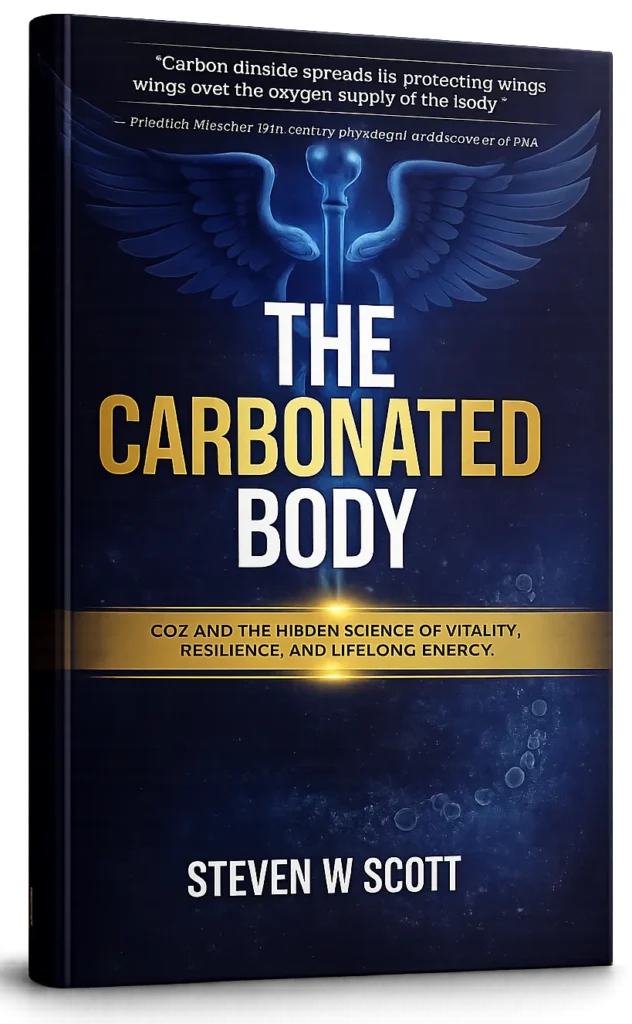
Download a Free Chapter from The Carbonated Body

Discover the overlooked role of carbon dioxide in energy, circulation, and cellular health.

The Carbonated Body Free Chapter

Add a descriptive message telling what your visitor is signing up for here.

Marketing by
javascript:void(0)
				
					javascript:void(0)