Bioelectricity is real. The mistake is turning it into a story where damaged tissue simply needs extra electrons, as if the body were a discharged battery.
Your body does not have one healing voltage
The internet often takes a real biological phenomenon and wraps it in the wrong mechanism. Healing-voltage claims are a good example. The body is bioelectric. Wounds generate measurable electrical fields. Cells maintain membrane potentials. Electrical stimulation can influence repair. Those statements are real.
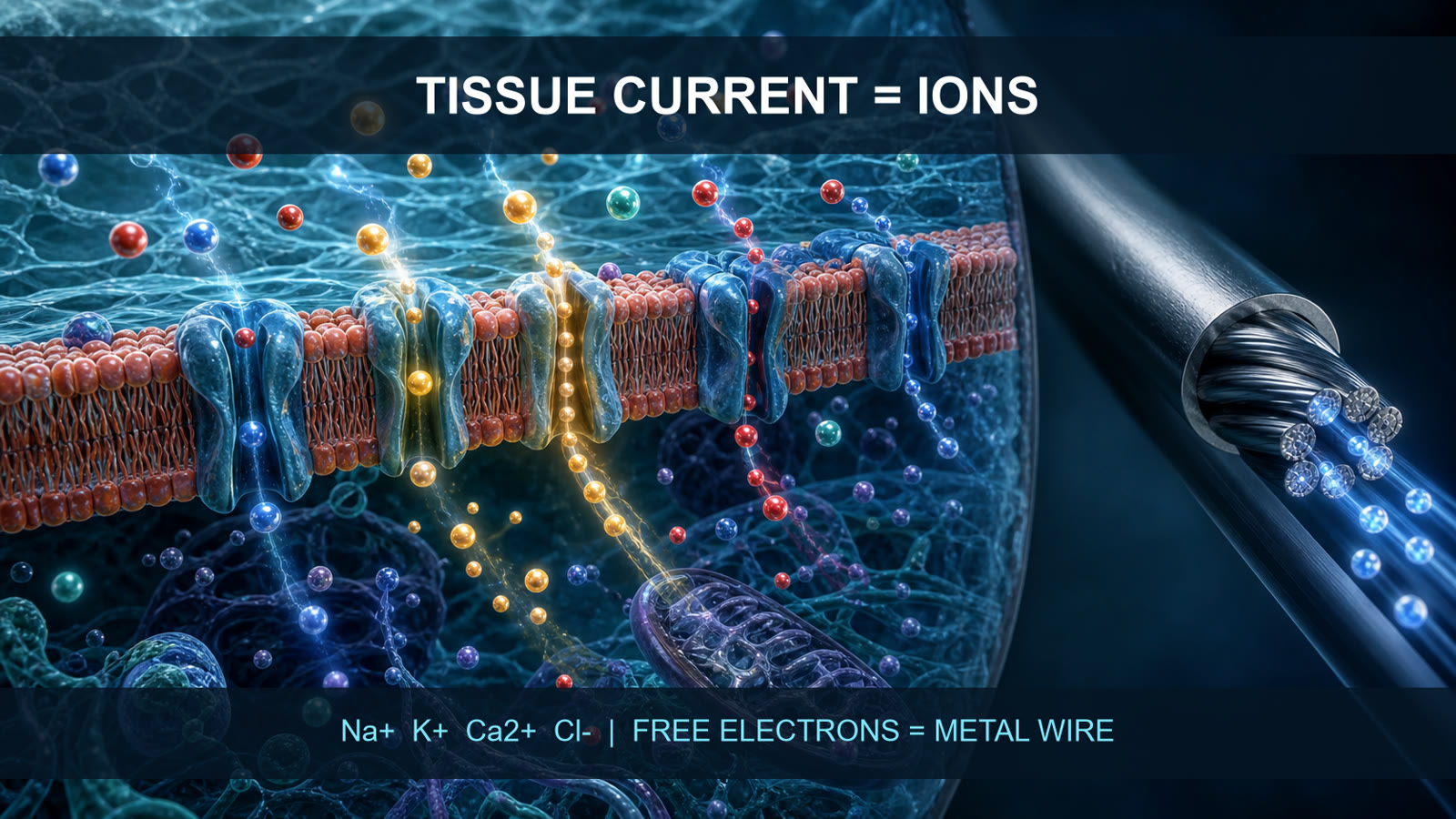
There is no single voltage assigned to a thumb, muscle, or organ. Individual cells maintain voltage differences across their membranes by controlling the movement of charged ions. Sodium, potassium, calcium, and chloride are central to this process.
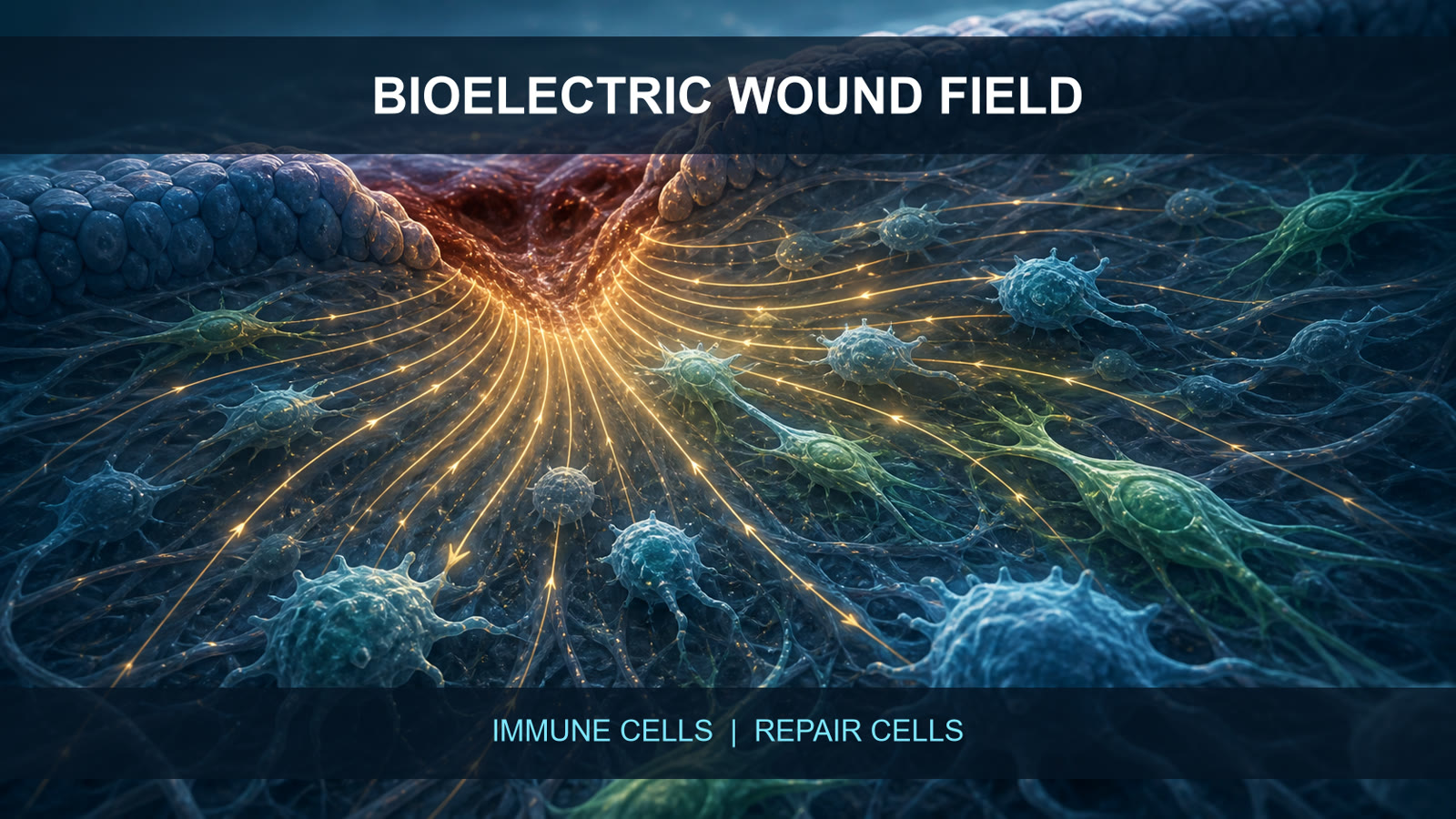
When tissue is injured, the epithelial barrier is disrupted and local ionic currents form around the wound. These endogenous fields can act as directional cues for keratinocytes, immune cells, fibroblasts, and other cells involved in repair. Researchers call this directional response electrotaxis or galvanotaxis.
That makes bioelectric signaling important, but it does not validate every voltage claim attached to it. A local wound field is not the same thing as assigning a fixed negative millivolt value to an entire body part.
In tissue, current is carried by ions
In a metal wire, current is carried by mobile electrons. Biological tissue is different. It is a water-rich electrolyte environment, so current is carried primarily by ions moving through extracellular fluid, membranes, and specialized channels.
That distinction matters. Applying an electrical field may change ion movement, cell migration, blood flow, or signaling around an injury. It does not mean free electrons travel through the body and drop directly into mitochondria.
The deeper principle is that supply is not delivery. Something can be present without being available to the system that needs it. Electrical charge at the skin is not automatically usable mitochondrial energy.
Mitochondria require controlled electron flow
Mitochondria do use electrons, but they use them through a highly organized metabolic pathway. Nutrients are broken down and their electrons are captured by carriers such as NADH and FADH2. Those carriers deliver electrons to defined entry points in the mitochondrial electron transport chain.
The electrons then pass through a controlled sequence of protein complexes in the inner mitochondrial membrane. The released energy pumps protons across that membrane, producing a gradient. ATP synthase uses the return flow of those protons to manufacture ATP.
This is not random conduction. It is controlled transfer through living molecular architecture.
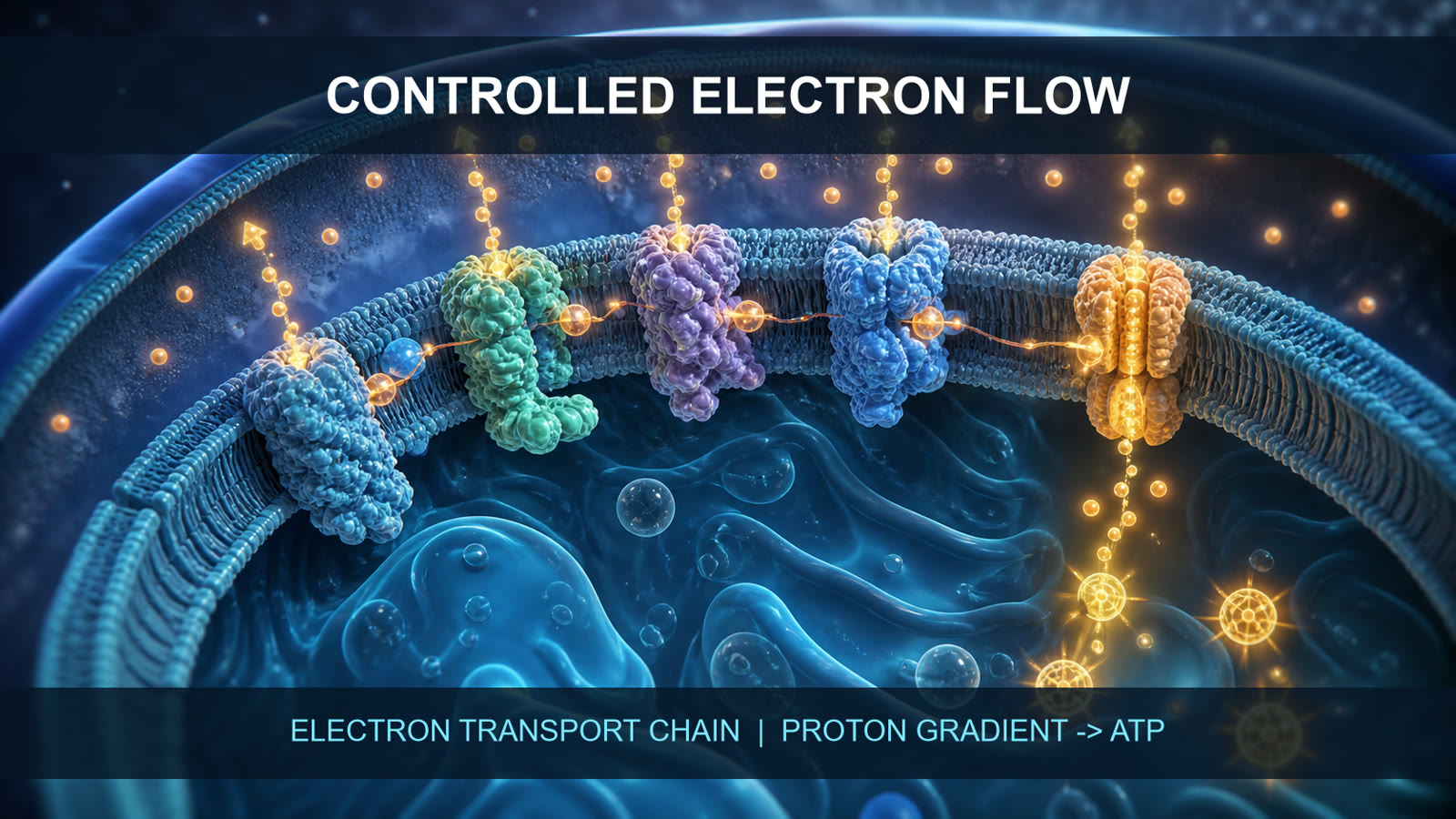
Organization is also protective. Electrons that escape the normal chain can partially reduce oxygen and form reactive oxygen species. These molecules have legitimate signaling roles at controlled levels, but excessive production can damage proteins, membranes, and DNA. The goal is therefore not more electrons. It is stable, regulated electron flow through the correct pathways.
Where CO2 fits
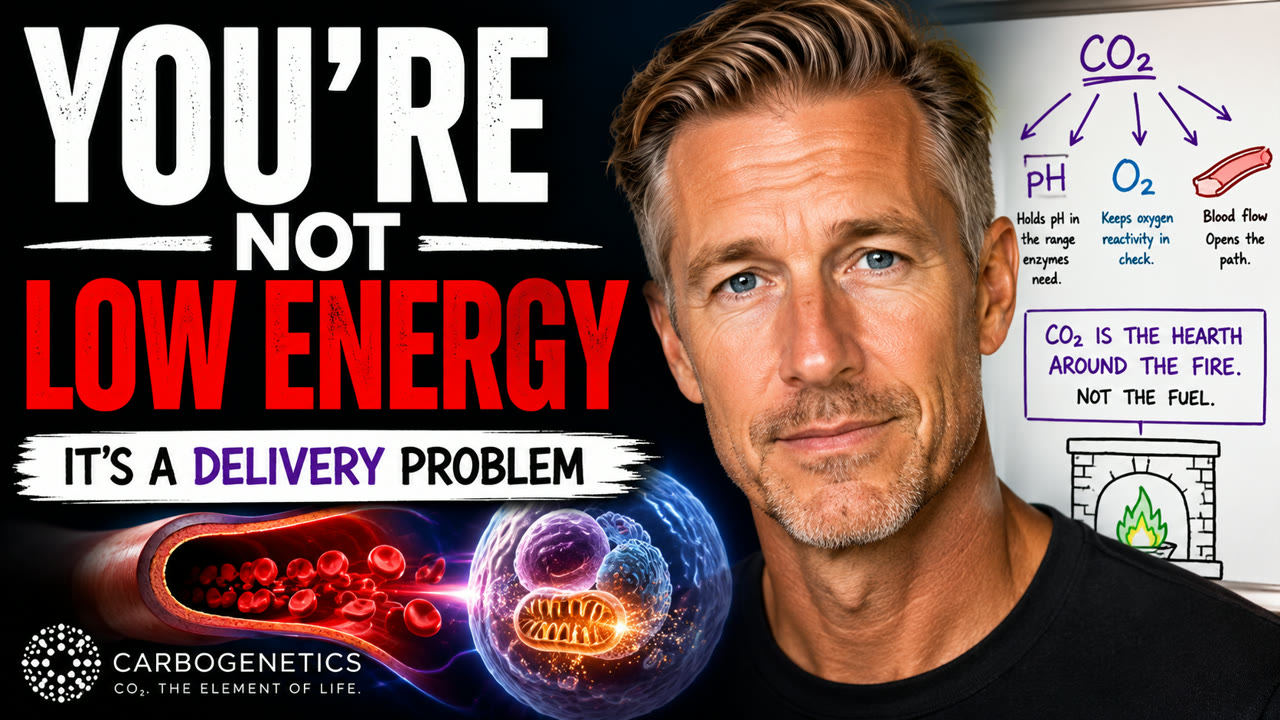
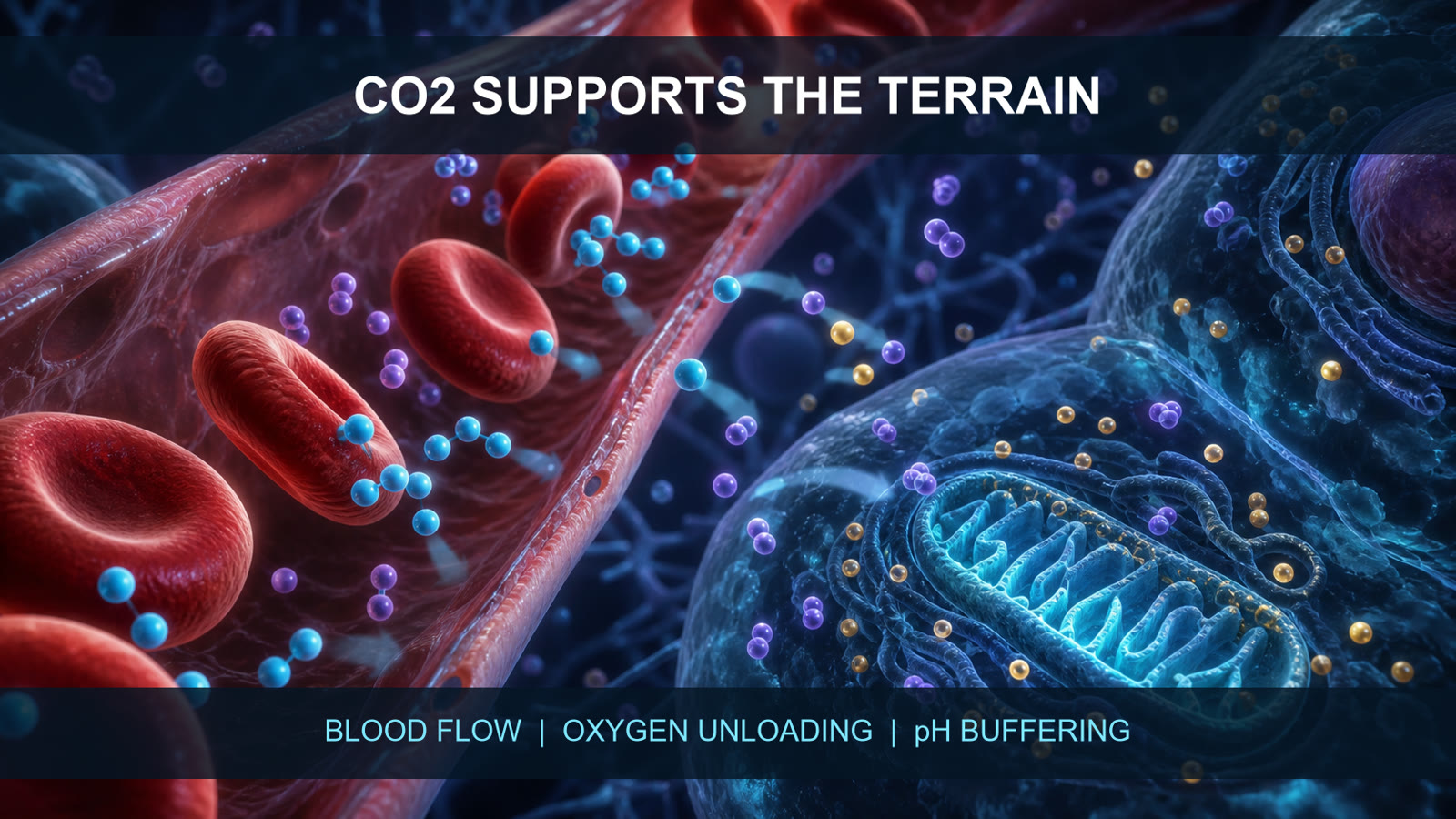
CO2 is not an electron supplement and it is not a cure for every wound. It is part of the physiological environment that makes circulation, oxygen delivery, buffering, and metabolism work coherently.
Through the Bohr effect, higher local CO2 and acidity reduce hemoglobin's affinity for oxygen, helping oxygen unload in metabolically active tissue. CO2 also strongly influences vascular tone, especially in cerebral circulation, and participates with bicarbonate in one of the body's major pH-buffering systems.
These functions matter because mitochondrial enzymes, membrane proteins, oxygen utilization, and proton gradients all depend on their chemical environment. Oxygen can be abundant in the blood and still be poorly delivered or poorly used. Again, supply is not delivery.
Healing is a systems problem
Electrical stimulation may have useful clinical applications, and endogenous electrical fields are a genuine part of repair biology. But healing cannot be reduced to forcing a tissue toward a magical voltage.
Repair requires circulation, oxygen unloading, ion gradients, intact membranes, metabolic fuel, mitochondrial organization, pH control, immune coordination, and the physical architecture through which all of those processes move.
This is the more useful way to think about bioelectricity: not as a battery charge imposed from outside, but as one layer of a living system. The body does not merely need energy to be present. It needs terrain, structure, and flow that make energy usable.
Research references
- Electrically stimulated cell migration and its contribution to wound healing
- The electrical response to injury: molecular mechanisms and wound healing
- Mitochondrial reactive oxygen species and cancer
- Integrative cerebral blood flow regulation
Educational information only. This article is not medical advice and does not replace evaluation or treatment by a qualified healthcare professional.