The performance effect of sodium bicarbonate is real. The deeper lesson is about the chemical terrain that makes muscular work and cellular energy possible.
The assumption worth questioning
The usual explanation for fatigue sounds simple: the working muscle runs out of energy. That is sometimes part of the story, but it is not the whole story. A muscle can still contain fuel and oxygen while its ability to continue producing force is already declining.
This is a supply-versus-delivery problem at the chemical level. Having energy substrates available does not guarantee that the enzymes, membranes, and protein complexes needed to use them can keep operating. Their environment matters.
That is why sodium bicarbonate is so interesting. Athletes are not taking baking soda because it provides calories. They are using it to alter buffering capacity and help preserve the conditions in which performance can continue.
Why pH matters before energy is gone
During high-intensity exercise, rapid metabolism changes hydrogen-ion concentration and acid-base balance. As the chemical environment shifts, processes involved in muscle contraction and energy metabolism can become less efficient. Performance can fall before the body has literally exhausted every available source of energy.
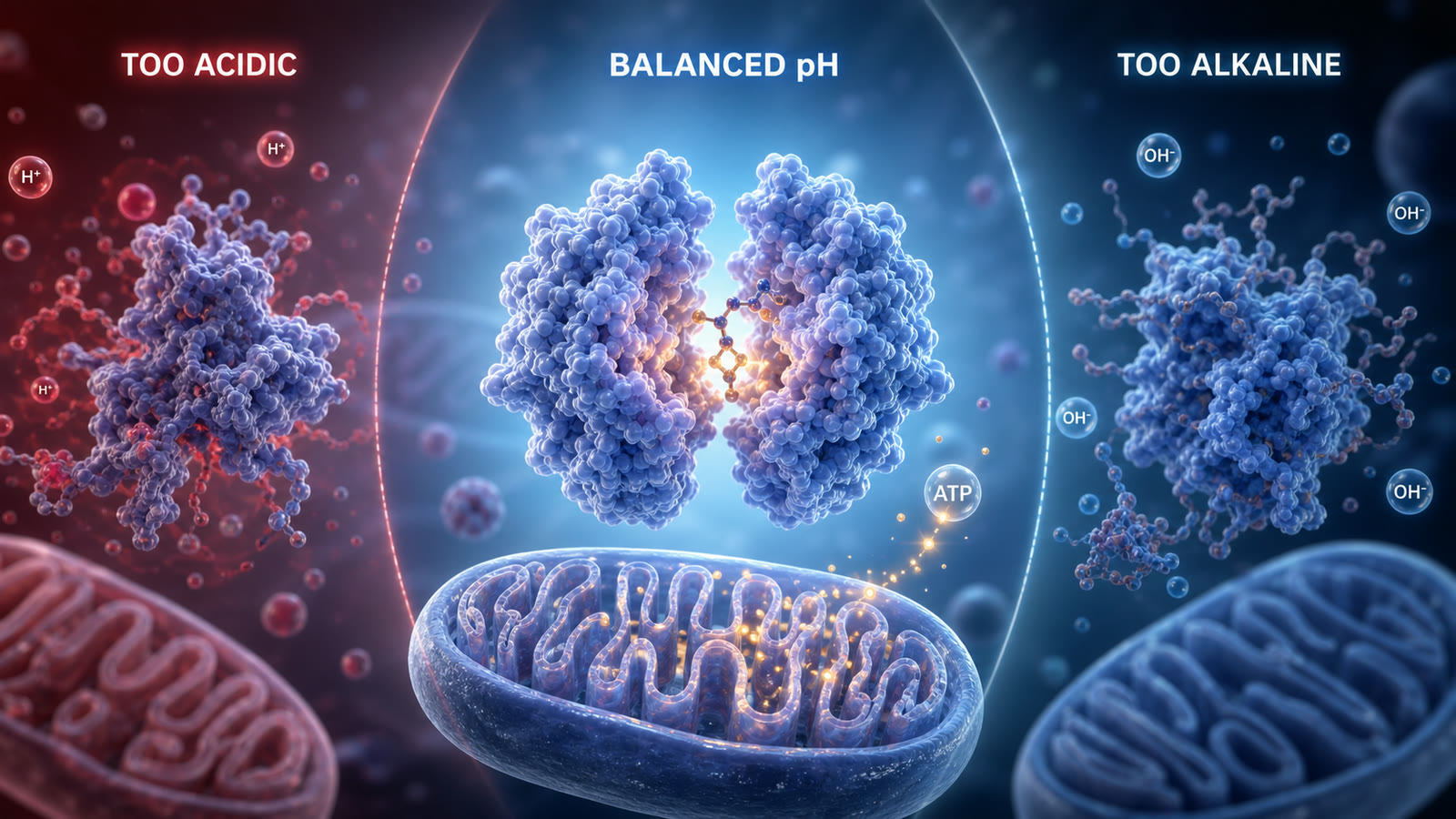
Enzymes operate within regulated ranges. Move too far outside those ranges and their behavior changes. The point is not that the body requires one perfectly fixed pH everywhere. Different compartments have different conditions, and the body constantly adapts. The point is that useful biological work depends on regulation.
Sodium bicarbonate can increase extracellular buffering capacity before certain types of intense exercise. This can support the movement and handling of hydrogen ions associated with hard muscular work, delaying the point at which the changing environment contributes to fatigue.
That is an acute performance strategy. It demonstrates that the terrain surrounding muscular work can matter as much as the amount of fuel still present.
Lactate is not simply the villain
For years, lactate was treated as the substance that caused the burn and stopped the muscle. That account is too crude. Lactate participates in metabolism and can serve as a useful fuel and shuttle. The fatigue problem is more closely connected to the broader disturbance in hydrogen-ion regulation, pH, and the ability of the contractile and metabolic systems to keep functioning.
This distinction changes the question. Instead of asking how to eliminate one supposedly bad molecule, we can ask what helps the system remain regulated under load.
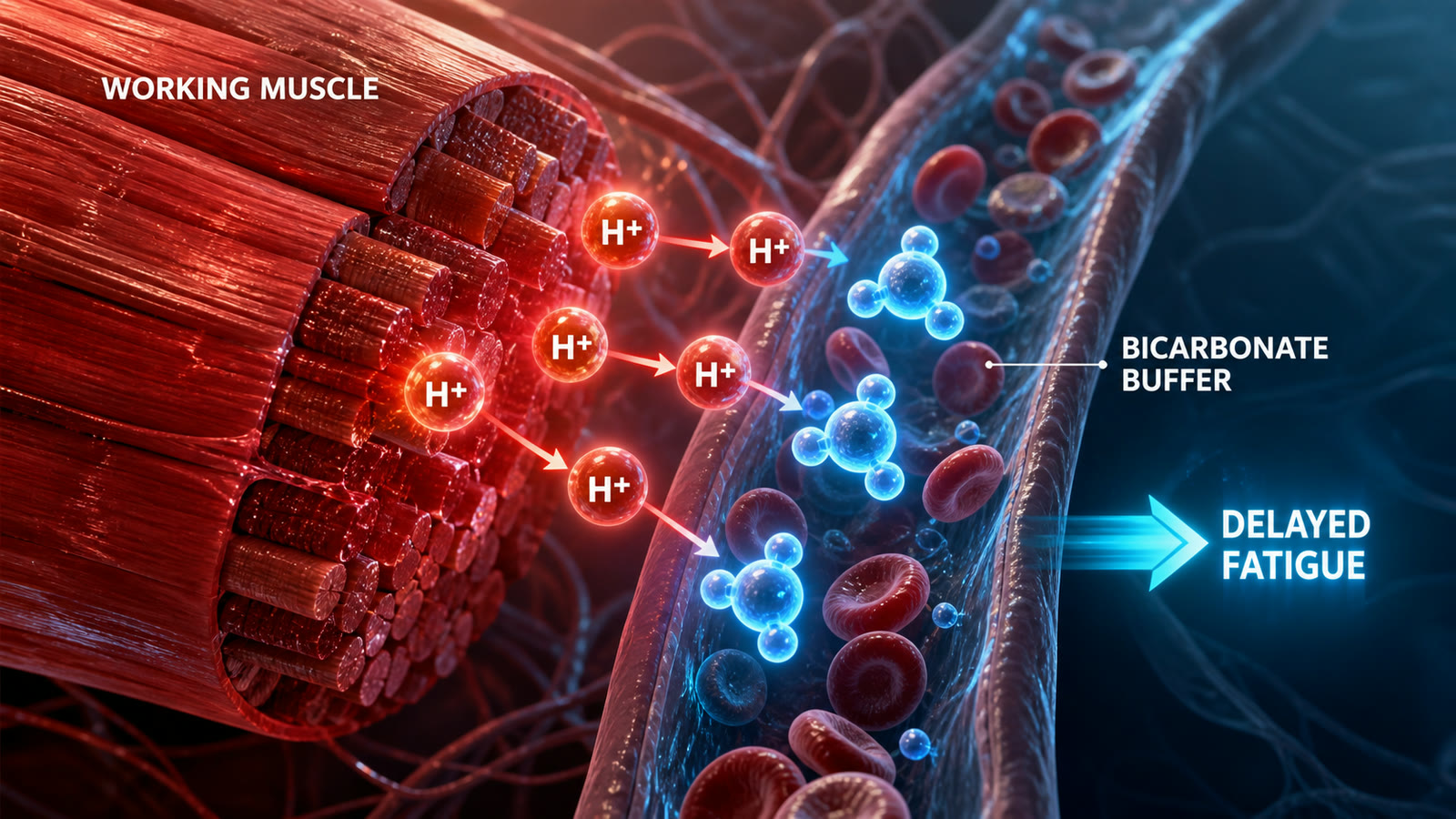
Bicarbonate matters because it participates in that regulation. Increasing bicarbonate does not make the body invincible or remove every cause of fatigue. It expands buffering capacity under the right circumstances, which can be valuable during repeated or sustained high-intensity efforts.
CO2 and bicarbonate belong to the same system
Carbon dioxide and bicarbonate are often discussed as if they were unrelated. Chemically, they are connected through one of the body's central reversible buffering reactions:
CO2 + H2O ⇌ H2CO3 ⇌ H+ + HCO3-
This relationship allows the respiratory system and kidneys to participate in acid-base regulation across different timescales. The lungs can change carbon dioxide rapidly through ventilation. The kidneys generally adjust bicarbonate and hydrogen-ion handling more slowly.
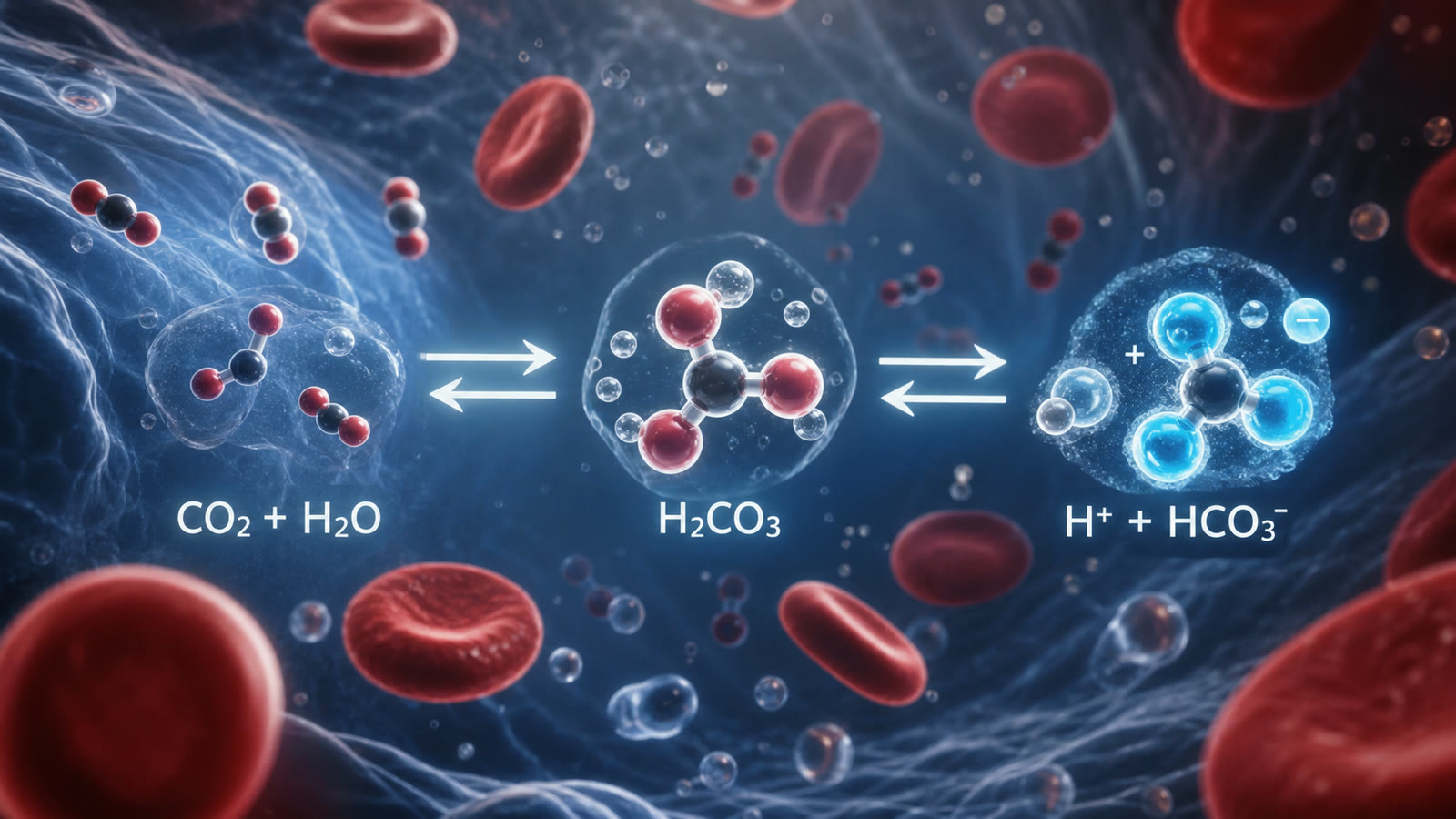
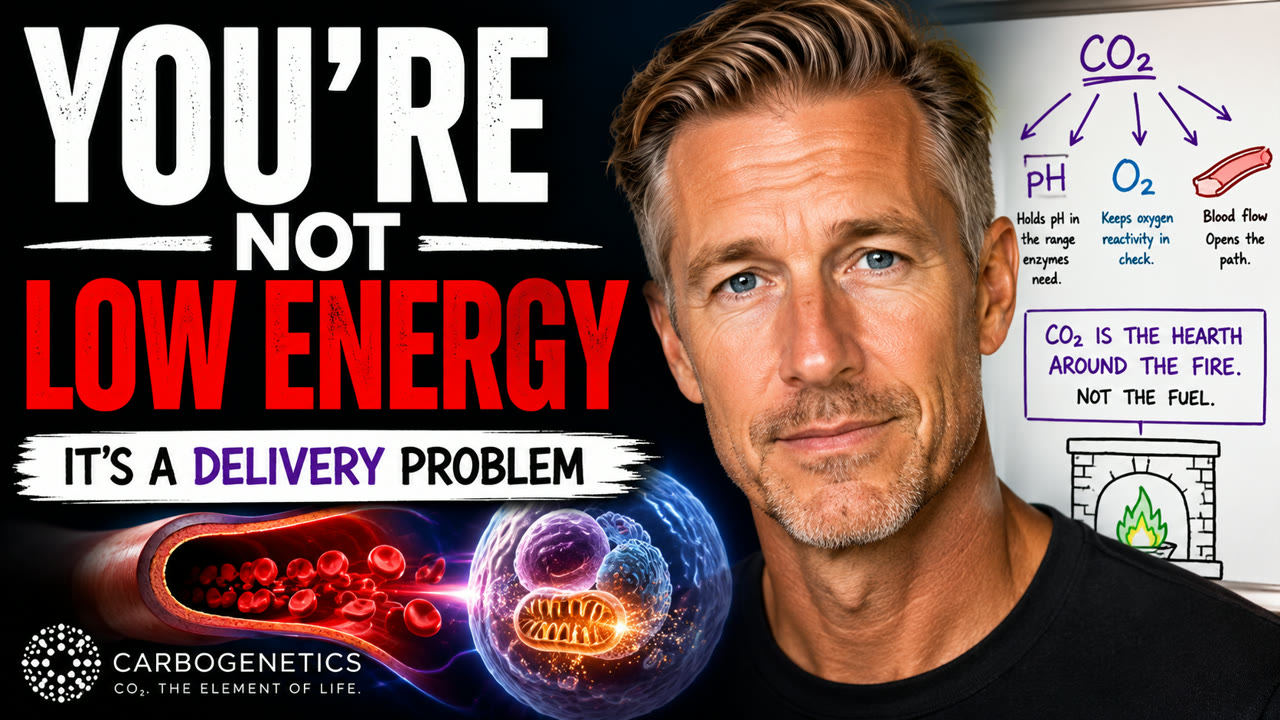
This is why describing CO2 only as metabolic waste is incomplete. CO2 must be eliminated within a healthy range, but it also participates in pH regulation, vascular tone, blood flow, and oxygen unloading. It is not a cure and more is not always better. It is a coordinator inside a regulated system.
The body is intelligent and adaptive. It is constantly balancing production, transport, conversion, and removal. Healthy physiology does not maximize one side of the equation. It preserves the range in which the whole system remains coherent.
The mitochondrial connection
The pH discussion becomes even more important inside mitochondria. The electron transport chain uses energy from electrons to pump protons across the inner mitochondrial membrane. That separation creates an electrochemical gradient.
ATP synthase then allows protons to flow back across the membrane and captures part of that stored potential as ATP. ATP is the transferable energy currency, but the proton gradient is closer to the battery that makes ATP production possible.
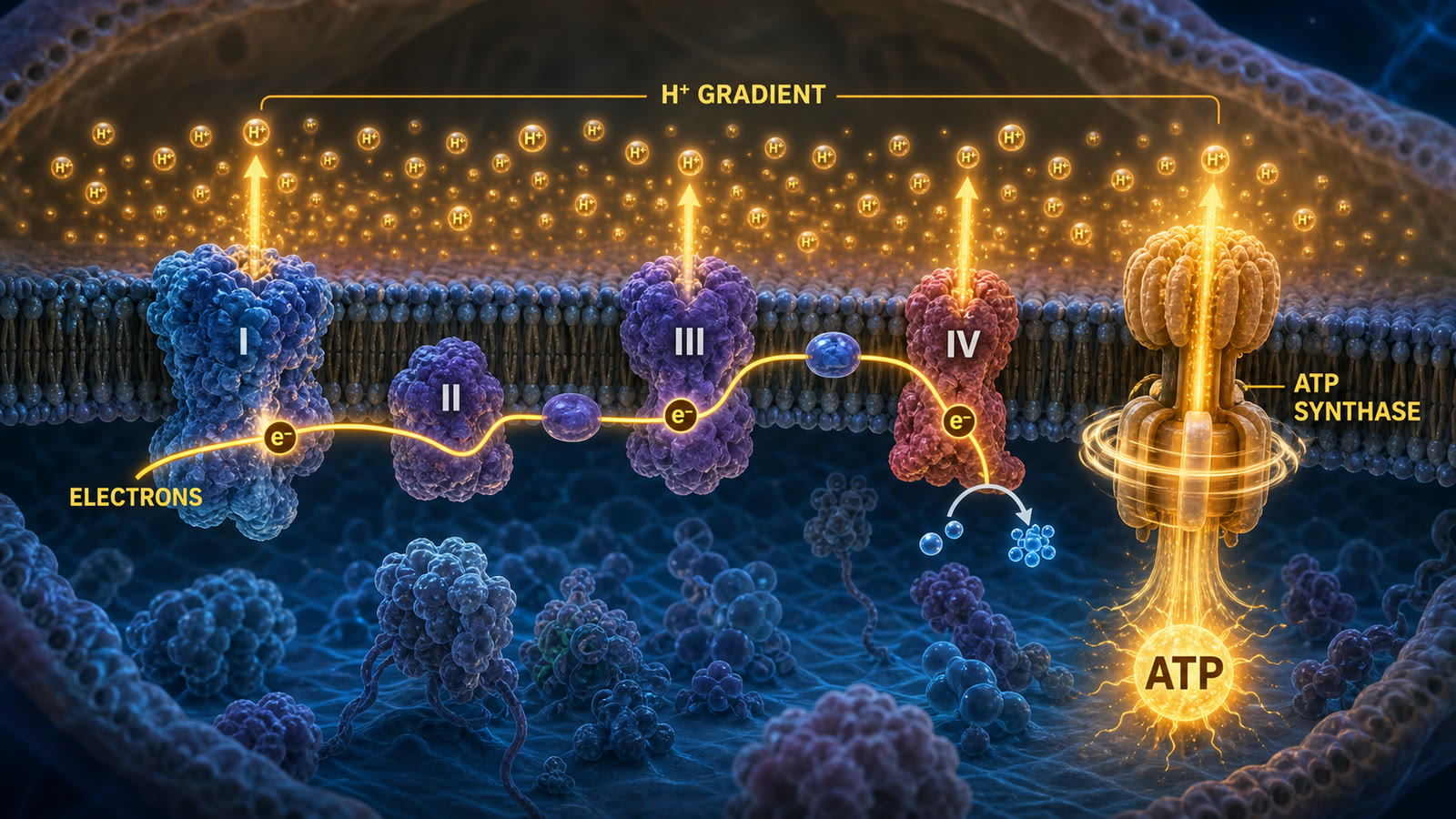
This does not mean that blood bicarbonate directly controls every mitochondrial proton. Cellular compartments are carefully separated and regulated. It does mean that hydrogen-ion gradients, membrane conditions, enzyme function, oxygen delivery, and acid-base regulation are all parts of the environment in which usable energy is produced.
The presence of oxygen is not the same as its delivery and use. A person can have excellent oxygen saturation while local blood flow, oxygen unloading, or mitochondrial readiness remains limiting. Supply is not delivery. The terrain determines whether what is present becomes usable.
Acute supplementation is not long-term adaptation
An important distinction must remain clear. Taking sodium bicarbonate before an event and improving CO2 tolerance through breathing training or controlled exposure are not equivalent interventions.
Sodium bicarbonate loading can acutely raise blood bicarbonate and has research behind its use in particular forms of high-intensity exercise. Breathing and CO2 tolerance work ask a different, longer-term question: can someone avoid unnecessary over-ventilation, tolerate normal rises in CO2 more comfortably, and allow respiratory and renal regulation to operate efficiently?
One approach temporarily changes a component of extracellular buffering. The other may influence breathing behavior, ventilation, nervous-system response, and adaptation over time. They should not be presented as substitutes without direct comparative evidence.
The responsible conclusion is not that everyone should take baking soda or attempt improvised CO2 exposure. Sodium bicarbonate can cause significant gastrointestinal distress, and individual health conditions matter. Any supplementation strategy should be discussed with an appropriate health professional, especially for people with blood-pressure, kidney, heart, or electrolyte concerns.
From a performance hack to a systems lesson
The baking-soda story begins as a performance hack, but it points upstream. A working muscle is not just a motor consuming fuel. It is living tissue inside a changing chemical, vascular, and energetic terrain.
Buffering helps preserve that terrain. Circulation and vascular tone influence flow. CO2 participates in bicarbonate chemistry and oxygen unloading. Mitochondria depend on organized proton gradients and intact membranes. These are not isolated facts. They are interacting layers of the same living system.
CO2 does not compete with exercise, nutrition, sleep, medicine, or supplementation. It helps coordinate conditions that can determine whether oxygen and energy become usable. The goal is not to force the body toward one number. It is to restore and preserve the range in which the body's own regulatory intelligence can keep terrain, structure, and flow working together.
Perhaps the most important lesson is not simply that bicarbonate can delay fatigue. It is that performance depends on coherence. Fuel must be available, oxygen must be delivered, chemistry must remain regulated, and mitochondria must be able to turn gradients into usable energy.
What looks like a spoonful of baking soda is really a lesson about the conditions that make biological work possible.